March, 2026 | Humans of Kashi
An Artist Who Finds Value Where Others See Waste

Raj Kumar ji: An Artist Who Finds Value Where Others See Waste

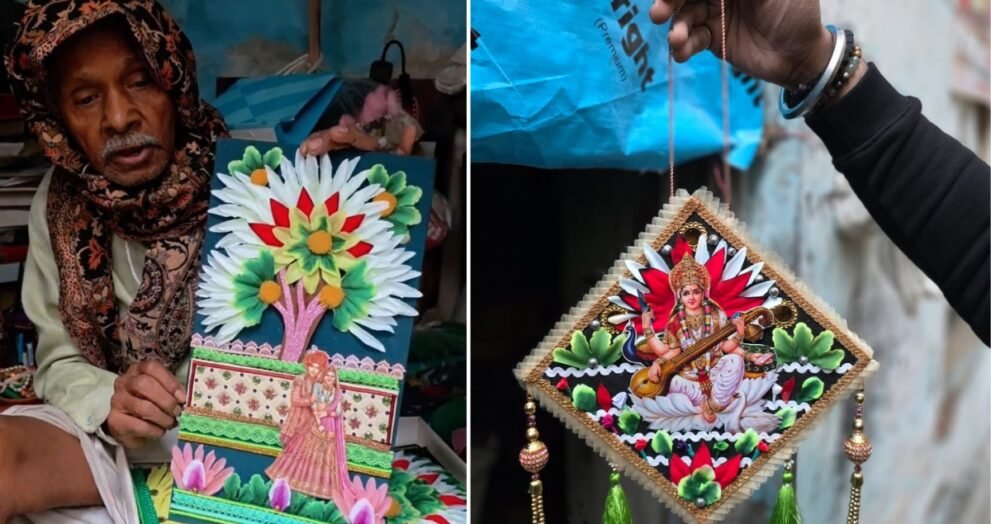
In a world that is quick to discard the old and chase the new, a quiet artist in Varanasi is doing the opposite. At 75, Raj Kumar ji spends his days giving forgotten things a second life i.e. wedding cards, broken bangles, scraps of paper and objects most people would throw away without a second thought. For Raj Kumar ji, nothing is ever useless. It only waits for the right imagination. What looks like waste to the world becomes raw material in his hands. With patience and devotion, he cuts, folds, layers and transforms discarded items into intricate artworks like temples, palaces, boats and divine forms that feel alive with emotion. A Childhood of Creativity, A Lifetime of Belief Raj Kumar ji’s journey did not begin in galleries or art schools. It began in childhood curiosity. While others focused on textbooks, he was drawn to shapes, textures and possibilities hidden in everyday objects. That curiosity often invited scolding rather than encouragement, but it never left him. “I never learned this from anywhere. It’s God’s gift. Nature’s gift.” he says simply. There were no formal lessons, no techniques taught only observation, intuition and faith. Over decades, that instinct grew into a language of its own. Each piece he creates is guided not by rules, but by feeling. One artwork might begin as a wedding card once a symbol of celebration, now forgotten. Under his hands, it becomes the image of Lord Krishna, complete with expressions, ornaments and stories folded into every detail. Even a cow, sacred and serene, emerges from layers of old paper which is carefully cut, shaped and brought to life. More Than Art, A Way of Seeing For Raj Kumar ji, this is not a hobby or pastime. It is a philosophy. A reminder that value is not fixed, it is discovered. His work quietly challenges the idea of waste. It asks a simple question: what if we looked again? What if what we throw away still has something to say? In a time of overflowing landfills and fast consumption, his art offers a gentler lesson. Sustainability does not always come from large systems or big solutions. Sometimes, it begins with one person choosing not to throw something away. Creativity Has No Age Perhaps the most powerful part of Raj Kumar ji’s story is not the art itself, but the life behind it. At 75, he continues to create every day proving that creativity does not retire. Inspiration does not fade with age. And purpose does not have an expiry date. He teaches us that imagination can be found anywhere it can be in an old card, a broken bangle, a discarded piece of paper. All it needs is attention. Where people see trash, Raj Kumar ji sees stories waiting to be told. Because for him, every fragment holds a new thought, a new form and a new life.
A Varanasi Family’s Quiet Green Revolution

From Kitchen Waste to Black Gold: A Varanasi Family’s Quiet Green Revolution

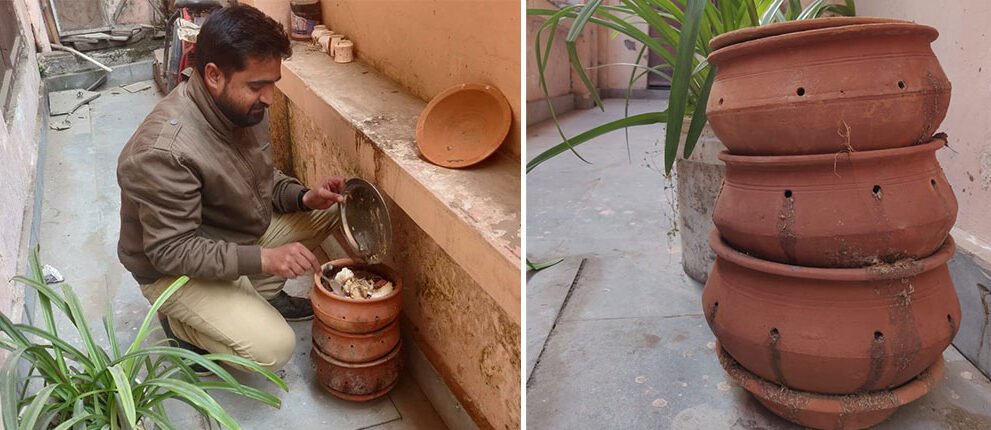
In a city known for ancient rituals and timeless traditions, a quiet transformation is taking place inside a modest household in Varanasi. While most of the city’s waste travels long distances to landfills, Kuldeep Choudhary’s family has found a way to stop garbage at its source i.e. their own kitchen. What makes their story powerful is not technology or investment, but intent. Fruit peels, vegetable scraps, tea leaves, leftover food and garden trimmings no longer end up in overflowing bins. Instead, they are turned into something valuable which is nutrient-rich compost, often called black gold. Learning to Rethink Waste Kuldeep Choudhary, a resident of Shivpurwa Ward Near Sigra, did not start as an expert in waste management. His journey began when a team from the Varanasi Municipal Corporation (VMC) visited his neighbourhood as part of a door-to-door awareness campaign on home composting. Trained by the VMC team under the Waste NAMA (Nationally Appropriate Mitigation Action) project, Kuldeep learned how microbial cultures prepared by using cow dung can naturally decompose organic waste. With a little guidance and a lot of curiosity, he decided to try composting at home. Using a three-layer earthen pot composter which was made locally and set up inside his house, Kuldeep and his family began managing their wet waste themselves. When Patience Turns Waste into Wealth Composting is not instant. It demands patience, care and consistency. Over time, the family watched their everyday waste slowly transform into dark brown, crumbly compost with the smell of fresh earth. This compost now nourishes their home garden, where vegetables, flowering plants and herbs grow without chemical fertilizers. The family’s dependence on store-bought fertilizers has reduced and the soil has become healthier with every cycle. What was once seen as garbage has now become a resource which now feeds plants, improves soil health and closes the loop between consumption and care. Impact Beyond One Household The impact of this simple practice did not stop at Kuldeep’s doorstep. Neighbours began noticing the change i.e. fewer smells, cleaner surroundings and a household that produced almost no wet waste for collection. Inspired, many families in the colony started composting themselves. Slowly, the volume of waste collected from the area began to reduce. This meant fewer trips for waste transportation and a lower burden on the municipal system. With less waste reaching landfills, the potential emission of greenhouse gases such as methane also reduced proving that climate action does not always require large-scale projects. Sometimes, it begins at home. A Win for Waste Collectors and Potters Segregation of waste also improved the lives of others in the system. The dry waste which is now clean and recyclable became more valuable for informal waste collectors. With better segregation, they could recover more recyclables and earn more from their work. Unexpectedly, this movement also supported local potters. Earthen composters, used as small bio-reactors, revived demand for traditional pottery. In a time when many potters struggle to keep their craft alive, composting products brought dignity and income back into their hands. What began as a sustainability practice quietly strengthened livelihoods and cultural crafts. A Model for Kashi’s Future Kuldeep Choudhary’s family proves that waste management does not always need large infrastructure. Decentralized home composting can significantly reduce the pressure on cities like Varanasi, where waste generation is growing rapidly. Their story shows that sustainability is not about perfection, it is about participation. About choosing responsibility over convenience. About seeing waste not as a burden, but as a resource. Small Actions, Lasting Change In Kashi, where cycles of life and death are deeply understood, this family reminds us of another cycle that is of renewal. What we discard can return as nourishment. What we waste can become wealth. Sometimes, gold isn’t mined. It’s composted.

Swad-e-Banaras, Wrapped in a Leaf

Banarasi Paan: Swad-e-Banaras, Wrapped in a Leaf

There are cities you visit and then there are cities you taste. Banaras belongs to the second kind. Here, flavours are not just cooked they are lived, offered and remembered. Among all that Banaras gives the world – temples, ghats, music, silk and there is one humble pleasure that quietly holds the city’s soul together: Banarasi Paan. More than a mouth freshener, paan in Banaras is a ritual, a conversation and a way of being. To understand Banaras, you must understand the leaf. What Makes Banarasi Paan Different Banarasi paan is made using the Banaras Pan betel leaf, a variety cultivated in and around Varanasi and neighbouring districts such as Jaunpur, Ghazipur, Mirzapur and Chandauli. In 2023, this betel leaf received the Geographical Indication (GI) tag, legally recognising its unique origin and quality. The leaf itself is soft, glossy, aromatic and rich in natural oils. Unlike tougher varieties found elsewhere, Banarasi paan leaves fold gently and carry flavours beautifully from mild sweetness to a warm, lingering sharpness. Traditionally, the paan includes:             •           Betel leaf             •           Chuna (slaked lime)             •           Katha (catechu extract)             •           Areca nut             •           Optional natural flavourings like fennel, rose petal preserve, cardamom or saffron The magic lies in balance. Banarasi paan is never aggressive. It is subtle, measured and respectful much like the city itself. A Ritual Rooted in Faith and Daily Life In Banaras, paan is not eaten only after meals. It appears everywhere in temples, homes, weddings and street corners. Paan is considered auspicious in Hindu rituals and is often offered to deities during puja. It symbolises prosperity, respect and completion. No major ceremony from marriage to housewarming feels complete without it. But beyond rituals, paan is also deeply social. A paan shop in Banaras is not just a stall; it is a meeting point. People pause here after work, after a ghat walk, after a long thought. Conversations begin and end over folded leaves. News travels faster through paanwalas than through newspapers. The Craft of the Paanwala Every Banarasi paanwala is an artisan. Watch closely and you’ll see that paan-making is not rushed. The leaf is examined, cleaned, layered carefully, folded with precision and handed over with quiet pride. Many paan shops in Banaras are family-run with techniques passed down orally no written recipes, no shortcuts. Some shops have existed for decades, even centuries. Their fame spreads not through advertising but through memory “Us gali ke kone par jo paan milta hai…” Each paanwala adjusts the flavour to the person standing in front of them. Less chuna. More sweetness. Mild or sharp. In Banaras, paan is personal. From Royal Courts to Cinema Songs Historically, paan enjoyed royal patronage. Ancient Indian texts and medieval records mention betel leaves being served with rosewater, spices and perfumes in royal courts. In popular culture, Banarasi paan became immortal through music and cinema most famously in the song “Khaike Paan Banaras Wala”, which turned paan into a symbol of desi pride and playful rebellion. Yet despite fame and modern variations, the heart of Banarasi paan remains unchanged – simple, handcrafted and deeply local. Sweet, Saada and Seasonal Variations While the classic saada paan remains the most respected form in Banaras, the city also embraces gentle innovation. During festivals and winters, you may find paan infused with:             •           Gulkand             •           Dry fruits             •           Saffron             •           Natural essences What Banaras avoids is excess. Unlike flashy, heavily loaded versions found elsewhere, Banarasi paan values restraint. The leaf leads; the flavours follow. Paan as Economy, Identity and Livelihood Banarasi paan is not just culture – it is livelihood. Thousands of farmers cultivate betel leaves under carefully controlled shade conditions. Traders, transporters and paanwalas form a complete ecosystem that supports local economies. The GI tag has further strengthened this network by protecting authenticity and improving market recognition. In a changing city, paan remains one of the few traditions where urban life, agriculture, ritual and commerce still move together. Why Banarasi Paan Still Matters In an age of fast food and faster consumption, Banarasi paan asks you to slow down. It asks you to pause, chew, taste and reflect. Perhaps that is why paan survives in Banaras because the city itself refuses to hurry. It believes in afterthoughts, not endings. In conversations that linger. In flavours that stay. Banarasi paan is not about indulgence. It is about closure. A meal ends. A meeting ends. A walk ends. But something remains on the tongue, in the mind. That is Swad-e-Banaras.

Where Life End and Liberation Begins

Manikarnika Ghat: Where Life End and Liberation Begins

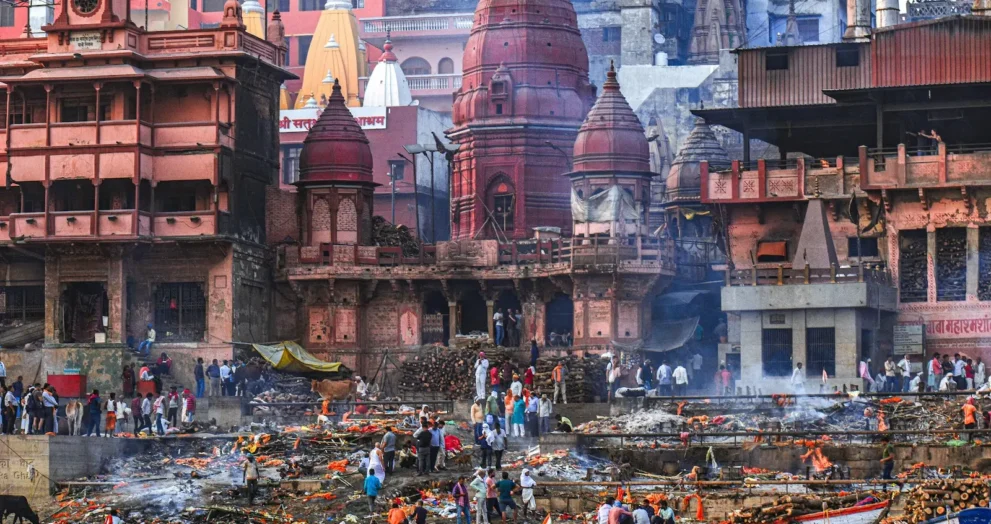
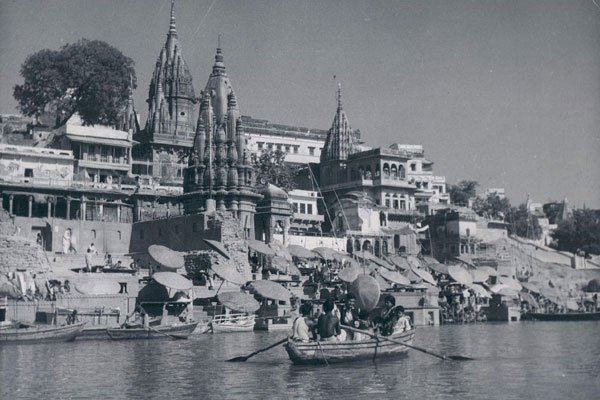
In the sacred geography of Kashi, there is one place where time seems to stand still, where fire never sleeps and where humanity confronts its ultimate truth. Manikarnika Ghat is not just a cremation ground; it is a living philosophy. Here, death is not feared or hidden. It is accepted, witnessed and understood as a passage toward liberation. Located on the banks of the Ganga in Varanasi, Manikarnika Ghat is considered one of the holiest places in Hinduism. For centuries, this ghat has remained active day and night, bearing silent testimony to the belief that the end of the body is the beginning of freedom for the soul. The Mythological Origins of Manikarnika The story of Manikarnika is deeply rooted in Hindu mythology. One widely believed legend says that Lord Vishnu dug a sacred kund here using his chakra while Lord Shiva watched over him. During this time, an earring of Goddess Parvati is believed to have fallen into the kund, giving the ghat its name. The Manikarnika Kund still exists today, considered one of the oldest sacred water bodies in the city. Another belief holds that Lord Shiva personally grants moksha here by whispering the Tarak Mantra into the ears of the departing soul. This faith has drawn countless devotees to wish that their final rites be performed at this ghat, believing it frees them from the cycle of birth and rebirth. The Eternal Fire and the Ritual of Cremation One of the most striking features of Manikarnika Ghat is the eternal funeral fire, known as the Akhand Chita. It is believed that this fire has been burning continuously for thousands of years. Every cremation fire at the ghat is lit from this sacred flame symbolizing continuity beyond time. Cremation rituals here are conducted with precision and deep spiritual meaning. Wood is weighed, rituals are performed, mantras are chanted and families participate with devotion rather than despair. The rituals are traditionally managed by the Dom community who have safeguarded this sacred duty for generations. Unlike elsewhere, death at Manikarnika is not an event of mourning alone; it is a moment of surrender and release. The crackling of wood, the flowing river and the chanting of prayers together form a powerful reminder of life’s impermanence. A Philosophy of Life and Death Manikarnika Ghat teaches one of Kashi’s greatest lessons: nothing is permanent. Kings and commoners, saints and sinners, rich and poor all meet the same end here. This stark equality strips life down to its essence and encourages reflection rather than fear. Visitors often describe the ghat as overwhelming at first, but deeply transformative once understood. It is a place that compels silence, introspection and humility. Many believe that witnessing cremation here is itself a spiritual experience, reminding one to live meaningfully and without attachment. Manikarnika in Modern Times Despite centuries passing, Manikarnika Ghat remains unchanged in its purpose. While Varanasi modernizes around it, the ghat continues its ancient rhythm uninterrupted. Photography is restricted, respect is expected and visitors are encouraged to observe quietly and sensitively. For travellers, it is not a tourist attraction but a place of understanding. For believers, it is the final destination. For Kashi, it is the eternal heart where the city’s spiritual promise is fulfilled daily. Why Manikarnika Ghat Matters Today In a world that often avoids conversations about death, Manikarnika Ghat stands as a reminder that acceptance brings peace. It teaches that liberation lies not in denial, but in understanding the cycle of existence. Kashi is believed to be the city where death loses its fear and Manikarnika is where that belief becomes visible. Here, flames rise, ashes return to the Ganga and souls are believed to find freedom. Not in silence, but in sacred continuity.

Banaras’ Winter Whisper That Melts Before You Blink

Malaiyo: Banaras’ Winter Whisper That Melts Before You Blink

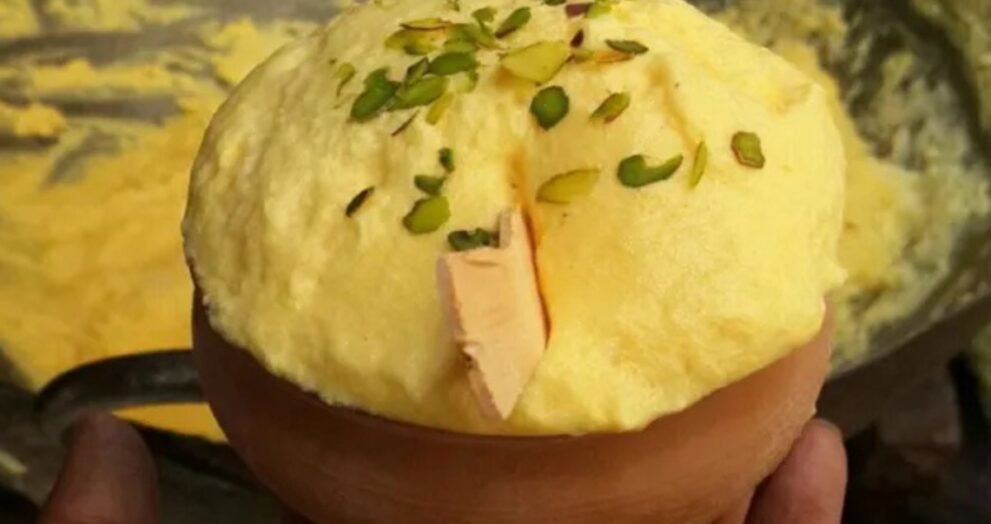
Banaras has a way of expressing itself softly. Not everything here announces its presence with sound or spectacle. Some traditions arrive quietly, stay briefly and leave behind a lasting memory. Malaiyo is one such delicacy, a winter dessert so light and fleeting that it feels less like food and more like an experience. Found only in the colder months, Malaiyo is not meant to last long. It appears with the morning mist and vanishes with the rising sun, much like the dew it depends on. What Is Malaiyo and Why Is It So Special? Malaiyo, also known as Makhan Malai is a traditional sweet from Varanasi made primarily from milk, sugar and natural flavourings like saffron and cardamom. What sets it apart is its texture i.e. airy, cloud-like and impossibly soft. It melts almost instantly on the tongue, leaving behind a gentle sweetness. Unlike modern desserts that rely on refrigeration or machinery, Malaiyo is deeply connected to nature. The process traditionally involves exposing sweetened milk cream to the cold winter air overnight. The morning dew and low temperature play a crucial role in giving Malaiyo its signature lightness. This natural dependence is why the dessert cannot be replicated outside winter or beyond Banaras with the same authenticity. A Century-Old Tradition at Shreeji Malaiyo In the narrow lanes of Chowk, Shreeji Malaiyo stands as a quiet guardian of this fading tradition. Long before food blogs and viral reels, this family-run shop was crafting Malaiyo with patience and devotion. For over a hundred years, the recipe has been passed down not through written notes, but through observation, memory and practice. There are no shortcuts here. The process begins before dawn, when the city is still half-asleep. Watching Malaiyo being prepared is almost meditative i.e. slow whisking, careful folding, saffron infusing warmth into the pale froth and crushed pistachios sprinkled gently on top. It feels ceremonial, as if the dessert is being offered rather than sold. Why Malaiyo Exists Only in Winter Malaiyo’s fragility is its identity. The dessert relies on cold air and dew, making winter mornings essential. As temperatures rise, the froth collapses and the magic disappears. This natural limitation has kept Malaiyo immune to mass production. In a world chasing year-round availability, Malaiyo reminds us that some things are precious precisely because they are temporary. You cannot store it, export it, or rush it. You must come to Banaras, wake up early and experience it fresh. More Than a Dessert, a Feeling The first spoonful of Malaiyo feels almost unreal. There is no bite, no resistance just softness dissolving into sweetness. It carries the spirit of Banaras itself: ancient yet gentle, spiritual yet deeply human. Malaiyo does not overpower. It whispers. And in that whisper, you taste patience, heritage and a city that still believes in doing things slowly. Shreeji Malaiyo is not just serving dessert. It is serving memory, devotion and the soul of Banaras, one delicate bowl at a time.

Keepers of the Sacred Fire at Kashi’s Eternal Ghats

Dom Community of Varanasi: Keepers of the Sacred Fire at Kashi’s Eternal Ghats

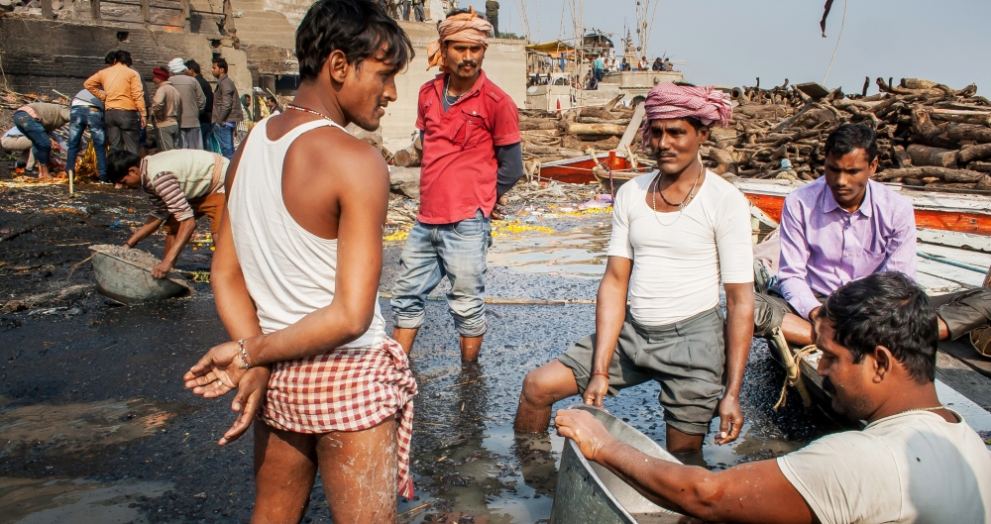
Varanasi, the spiritual heart of India is known for its temples, ghats, chants and the promise of moksha. Yet, behind the rituals of liberation stands a community whose role is indispensable to Kashi’s sacred rhythm the Dom community of Varanasi. For centuries, the Doms have carried the responsibility of tending the funeral pyres at Manikarnika Ghat and Harishchandra Ghat, ensuring that the ancient cycle of life and death continues uninterrupted. Who Are the Doms of Varanasi? The Dom community belongs to a Scheduled Caste group traditionally associated with cremation work in Hindu society. In Varanasi, their presence is deeply intertwined with religious belief. According to long-standing tradition, the sacred fire for cremation must be lit by a Dom without which the final rites are considered incomplete for attaining moksha. Despite their central spiritual role, the community has historically faced social stigma and exclusion. Ironically, those believed to help souls attain liberation often remain marginalized in everyday life. Life and Work at the Cremation Ghats Manikarnika Ghat regarded as the holiest cremation ground in Hinduism, funeral pyres burn day and night. The Doms manage every aspect of the cremation process: arranging wood, lighting pyres, maintaining the eternal flame and guiding grieving families through rituals. This work is physically demanding and emotionally taxing, exposing workers to intense heat, smoke and distressing sights on a daily basis. Most boys in Dom families are introduced to this occupation at a very young age, often learning the craft by observing elders rather than through formal training. For many, the profession is inherited, not chosen. The Invisible Lives of Dom Women While men work at the ghats, Dom women bear a different burden. Many live in poverty in settlements close to the cremation grounds, facing layered discrimination due to caste, gender and economic status. Reports highlight how Dom women struggle for basic healthcare, education and safety, while also managing households in harsh living conditions. Their labor whether emotional, domestic or often informal remains largely unseen, even though it sustains families tied to one of the most crucial rituals of Hindu society. Economics of Death and Survival Cremation in Varanasi also functions as an informal economy. The cost of wood, services and rituals is often negotiated and Doms earn modest incomes from this sacred labour. Despite being central to the religious economy of Kashi financial security remains elusive for most families. Modern interventions, such as electric crematoriums and policy reforms have sparked debate within the community. While these aim to reduce environmental impact, many Doms fear loss of livelihood and erosion of tradition. Change, Education and Hope In recent years, younger members of the Dom community have begun seeking education and alternative careers. Stories of Dom children pursuing schooling reflect a slow but meaningful shift, a desire to redefine identity beyond caste-assigned work. Social organizations, journalists and researchers have also begun documenting their lives more sensitively, encouraging dialogue around dignity, labour rights and social inclusion. Why the Dom Community Matters to Kashi The Dom community represents the profound paradox of Varanasi, a city where death is not an end but a transition. Their work sustains one of the oldest living spiritual traditions in the world. Without the Doms, Kashi’s promise of moksha would remain incomplete. Understanding their lives forces us to confront uncomfortable truths about caste, faith and inequality and reminds us that spirituality must walk hand in hand with humanity. Respect Beyond Ritual The Dom community of Varanasi are not merely cremation workers; they are custodians of Kashi’s eternal flame. As the city modernizes and the world watches Varanasi with awe, acknowledging the dignity, rights and lived realities of the Doms becomes not just necessary but sacred. In the city where death teaches liberation, perhaps it is time for society to learn compassion.

Walking the Sacred Circle of Kashi’s Eternal Soul

Panchkoshi Yatra: Walking the Sacred Circle of Kashi’s Eternal Soul

Kashi is not just a city you visit – it is a living, breathing spiritual landscape that is meant to be experienced. Among its many sacred traditions, the Panchkoshi Yatra stands apart as one of the most profound pilgrimages in Hindu culture. This ancient walk is not about reaching a destination; it is about becoming part of Kashi itself. What Is Panchkoshi Yatra? The Panchkoshi Yatra, also known as Panchkoshi Parikrama is a sacred circumambulation of the spiritual territory of Kashi. The word Panchkoshi means “five kos” and the yatra covers a vast circular route of approximately 80-88 kilometres around Varanasi. Traditionally completed in five days, the journey begins and ends at Manikarnika Ghat, the eternal cremation ground symbolizing liberation (moksha). This sacred circuit marks the mythical boundary of Kashi, the land believed to be personally protected by Lord Shiva. Walking this route is considered equivalent to walking through the very body of the city, where every step carries spiritual merit. The Spiritual Meaning Behind the Walk Panchkoshi Yatra is deeply rooted in Shaiva philosophy. According to tradition, Lord Shiva himself defined this sacred territory and installed protective Shiva lingas along the route. Pilgrims visit over 100 shrines, most of them dedicated to Shiva during the parikrama. Unlike fast-paced pilgrimages, Panchkoshi Yatra emphasizes slow and mindful walking. Devotees believe that walking the entire circuit helps shed karmic burdens accumulated over lifetimes. The journey is also symbolic of life itself moving through forests, villages, temples, silence, fatigue, devotion and faith all at once. The Traditional Route and Sacred Halts The yatra is traditionally completed in five stages with night halts at key sacred points:             •           Manikarnika Ghat             •           Kardameshwar             •           Bhimchandi             •           Rameshwar             •           Shivpur Each halt is associated with ancient temples, local legends and rituals. Devotees often sleep on temple grounds or simple dharmshala’s, embracing austerity as part of the spiritual discipline. Why Do People Still Walk Panchkoshi Yatra? In an age of convenience and speed, the Panchkoshi Yatra remains a walking pilgrimage and that is its greatest power. People undertake this yatra for many reasons: seeking spiritual clarity, fulfilling vows, honoring ancestors, or simply surrendering to faith. Many believe that completing the yatra grants the same merit as living in Kashi for years. Others walk it to experience humility, discipline and detachment. The physical effort strips away distractions and allow pilgrims to connect deeply with themselves and with Shiva. Panchkoshi Yatra in Today’s Time Even today, thousands undertake this yatra annually, especially during auspicious months. While modern facilities have improved like better roads, rest points and guidance, the essence remains unchanged. Pilgrims still walk barefoot or with minimal support, chanting Shiva’s name and trusting the path. Interestingly, Panchkoshi Yatra is not limited to saints or the elderly. Families, young seekers and first-time pilgrims walk together, turning the journey into a shared spiritual experience. Walking Kashi, Step by Step Panchkoshi Yatra teaches that Kashi is not confined to ghats or temples, it extends far beyond into fields, villages and forgotten shrines. Walking this sacred circle is like tracing the eternal outline of Shiva’s city. Those who complete the Panchkoshi Yatra often say the same thing: you return physically, but something within you stays transformed. In Kashi, walking itself becomes worship and every step becomes a prayer.

Kashi Through Time

Kashi Through Time: Where Eternity Learns to Evolve

Kashi is not a city bound by timelines. It is often described as shashwat – eternal – existing beyond the rise and fall of empires, beyond recorded history and inherited tradition. And yet, Kashi is not frozen in the past. It lives, breathes, adapts and renews itself with every generation. What makes Kashi unique is this rare balance, where ancient wisdom flows effortlessly alongside modern aspirations. It is a city where the past does not resist change and progress does not erase memory.  The Spiritual Confluence of Civilisations Kashi is one of the few cities in the world where multiple spiritual streams converge naturally. Rooted deeply in the Vedic–Puranic tradition, it is believed to be the eternal abode of Lord Shiva, the deity of benediction and transformation. Alongside Shiva, the presence of Vishnu, Shakti, Surya and Ganesh manifests through countless temples, festivals, rituals and lived traditions. At the same time, Kashi also holds a foundational place in the birth of Buddhism and Jainism. Just a short distance away, at Sarnath, Buddha delivered his first sermon, teaching the Four Noble Truths, giving the world a new path rooted in compassion and awareness. Jainism too found voice here through the teachings of the 23rd Tirthankar Parshwanath, who preached truth, non-violence, non-stealing and non-attachment. In Kashi, these philosophies do not compete. They coexist layered, respected and alive. A Decade of Transformation with Continuity Between 2014 and 2025, Varanasi witnessed one of the most significant phases of transformation in its long history. Under the leadership of Prime Minister Narendra Modi and the execution by Chief Minister Yogi Adityanath, the challenge was clear: modernise without disrupting Kashi’s soul. Infrastructure development reshaped connectivity with better roads, bridges, flyovers, railway upgrades, improved airport access and high-speed trains strengthened links with the rest of the country. Yet, care was taken to ensure that the city’s spiritual and cultural rhythm remained undisturbed. Traditional livelihoods such as Banarasi silk weaving, handicrafts, woodcraft, terracotta and brassware received renewed focus, empowering artisans financially while preserving generational skills. Several of these crafts earned Geographical Indication (GI) tags, reinforcing Kashi’s identity in global markets. Healthcare and wellbeing also saw notable expansion, with institutions such as the Mahamana Pandit Madan Mohan Malaviya Cancer Centre, eye hospitals, upgraded medical facilities and wellness-focused initiatives contributing to a stronger social infrastructure. Reimagining Tourism, Preserving Heritage Tourism in Kashi evolved thoughtfully. Projects like river cruises on the Ganga, ropeway connectivity and over 50 Smart City initiatives aimed to improve visitor experience while reducing pressure on the old city. A significant cultural effort was the installation of authentic signages across 87 Ganga ghats, narrating their historical and cultural significance for pilgrims and travellers alike. The creation of Namo Ghat opened new possibilities for cultural gatherings along the river, hosting festivals like Ganga Mahotsava in the embrace of Maa Ganga herself. The Kashi Vishwanath Corridor emerged as a defining moment, reconnecting the temple with the river and revealing dozens of ancient temples hidden over time. This project reaffirmed the idea of Shiva as Gangadhar, bringing the Ganga closer to Vishwanath and the devotee closer to both. A Global City with an Ancient Heart Kashi today is also a platform for global dialogue and cultural exchange. Events like Kashi Tamil and Telugu Sangamam, international summits and conventions hosted at the Rudraksh International Convention Centre have positioned the city on the world stage without diluting its essence. Even as stadiums expand, educational institutions grow and tourism flourishes, the core of Kashi remains unchanged its lanes, ghats, food, dialect, rituals and deep-rooted spiritual harmony. The City That Moves Forward Without Forgetting Kashi’s transformation proves a powerful truth: progress does not require erasure. A city can evolve while staying rooted. It can welcome the future without abandoning its past. In Kashi, eternity does not resist change; it guides it.

Preserving the Sacred Legacy of Shiva-Shakti in Kashi

Shri Gauri Kedareshwar Temple — Preserving the Sacred Legacy of Shiva-Shakti in Kashi

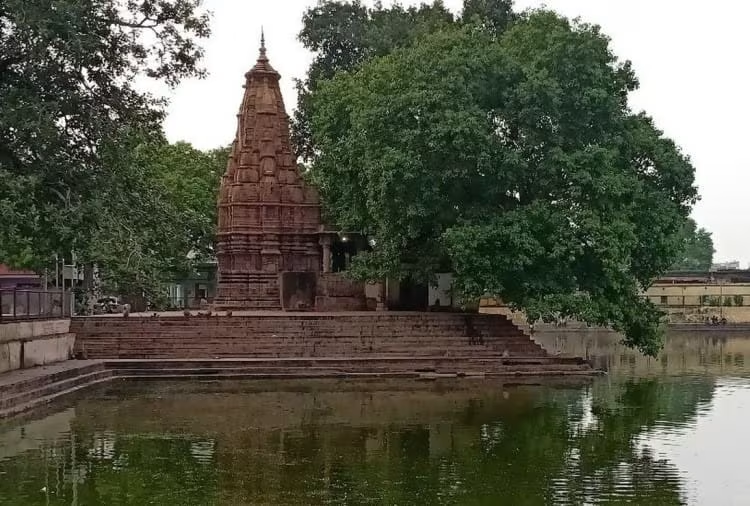
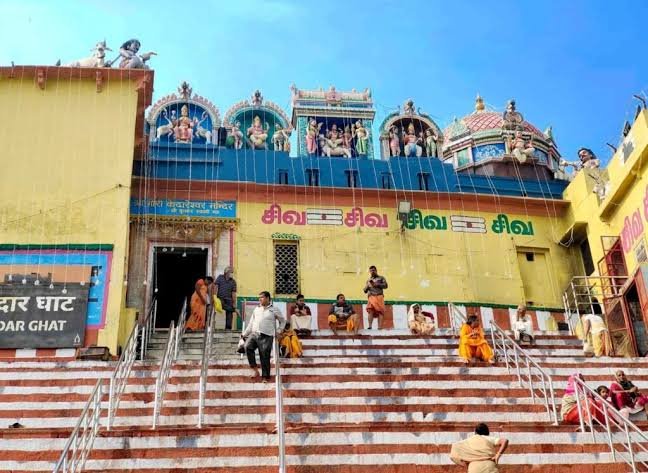
In the sacred lanes of Kashi, where every stone holds a story and every step echoes devotion, stands Shri Gauri Kedareshwar Temple. A shrine believed to carry the spiritual power of the Himalayas into the heart of Varanasi. For devotees, this temple is not just a stop on the yatra; it is a profound meeting point of penance, grace and liberation. It is said that the spiritual merit gained from visiting Kedareshwar in the Himalayas multiplies sevenfold when one offers darshan at Shri Gauri Kedareshwar in Kashi. This belief alone draws countless pilgrims, but the deeper stories rooted here make the temple truly timeless. The Legend of Maharaj Mandata’s Tapasya The origins of Shri Gauri Kedareshwar are deeply connected to Maharaj Mandata, an unwavering devotee of Lord Shiva. According to tradition, it was at this very spot that Maharaj Mandata performed intense tapasya, surrendering himself completely to Shiva and Parvati. Moved by his devotion, Shri Gauri Kedareshwar Ling manifested here. The appearance of the ling is not seen as a coincidence, but as a direct result of devotion tested by patience, discipline and faith. In Kashi, such stories are not remembered as myths, they are lived as truths. One of the most touching legends speaks of Maharaj Mandata preparing simple moong ki khichdi as an offering. Lord Shiva accepted this humble bhog and it is believed that the khichdi itself transformed upon the ling. This act reminds devotees that purity of intention matters more than grandeur of offering. Why Shri Gauri Kedareshwar Holds Special Significance Shri Gauri Kedareshwar is considered a Kedareshwar form of Lord Shiva, accompanied eternally by Goddess Parvati. Devotees believe that darshan here destroys sins accumulated over countless lifetimes and brings both spiritual and worldly peace. The temple is especially revered by those seeking liberation, inner strength and divine protection. Many pilgrims consciously include this shrine in their Kashi Yatra, believing it completes their spiritual circuit of the city. In a land where every temple holds meaning, Shri Gauri Kedareshwar stands out for its promise that sincere devotion here never goes unanswered. A Temple That Reflects Kashi’s Essence Architecturally modest yet spiritually powerful, the temple reflects Kashi’s true nature where faith is not displayed, but deeply felt. The atmosphere remains calm, devotional and grounded, allowing visitors to pause, pray and reflect. Chants of Om Namah Parvati Pataye, Har Har Mahadev echo softly here blending into the rhythm of daily life. Locals and pilgrims alike bow their heads here, carrying prayers whispered and unspoken. Why This Temple Must Be Part of Your Kashi Yatra Kashi is a city where journeys are incomplete without intention. Including Shri Gauri Kedareshwar Temple in your yatra is believed to multiply spiritual merit and deepen one’s connection with Shiva. Here, devotion is not hurried. It is offered quietly through folded hands, silent prayers and trust in the divine. Because in Kashi, temples are not just places you visit. They are experiences that stay with you.

A Living Palace, Not a Forgotten Ruin

Ramnagar Fort

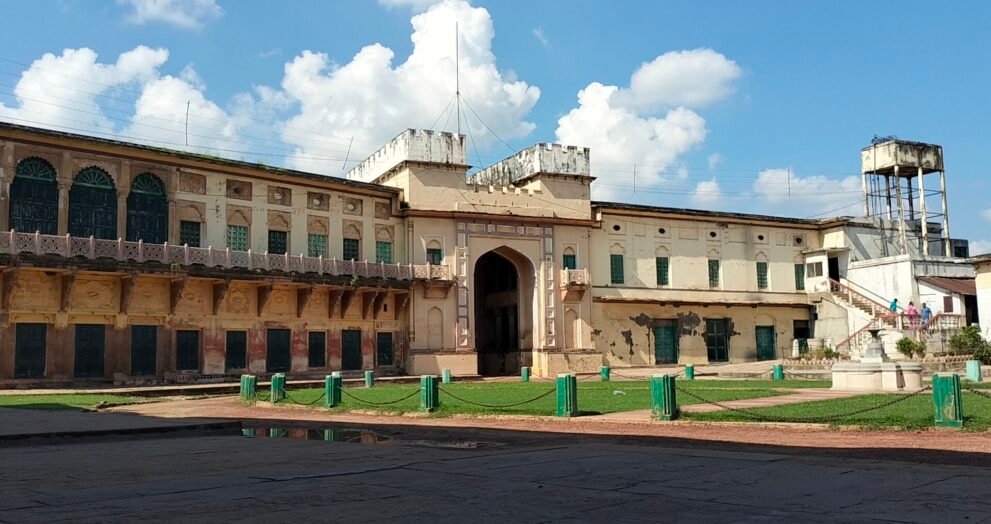
Across the Ganga, away from the crowded lanes and echoing bells of Varanasi, stands Ramnagar Fort – steady, watchful and timeless. Facing the ghats from the eastern bank this sandstone fort has witnessed centuries pass, yet it remains deeply rooted in the living rhythm of Kashi. Built in the 18th century by Maharaja Balwant Singh, Ramnagar Fort was never meant to dominate the city. Instead, it was designed to protect, observe and endure much like Kashi itself. A Living Palace, Not a Forgotten Ruin Unlike many historical forts frozen in time, Ramnagar Fort is still a lived-in space. The royal lineage of Kashi continues to reside here, making it one of the rare places where heritage remains part of everyday life. Its balconies overlook the river that has shaped the city’s destiny. Its courtyards have hosted ceremonies, processions and moments of quiet reflection. Walking through the fort feels less like visiting a monument and more like stepping into a memory that never left. Stories Preserved Within Its Walls Inside the fort lies the Saraswati Bhawan Museum, a modest yet powerful collection of objects that tell stories of royal life in Banaras. Vintage cars, palanquins, silk garments, ancient weapons, manuscripts and ivory work fill its halls. These are not displays of excess. They are reminders of journeys taken, battles fought, rituals performed and traditions upheld. Each artefact carries the weight of time, speaking softly of an era where faith, governance and culture walked together. Where Faith Becomes Theatre Ramnagar Fort transforms every year during the legendary Ramnagar Ramlila, a month-long retelling of the Ramayana that unfolds across the town itself. With no stage, no artificial lights and no modern effects, the performance relies on devotion, discipline and collective belief. Recognised by UNESCO as intangible cultural heritage, this tradition turns Ramnagar into a living epic where streets become scenes and faith becomes action. It is not watched; it is lived. The Fort and the River Seen from a boat at sunset, Ramnagar Fort rises quietly from the riverbank, its reflection dissolving into the Ganga. It neither calls out nor demands attention. And yet, it anchors the landscape reminding visitors that Kashi has always balanced spirituality with sovereignty. Why Ramnagar Fort Still Matters Ramnagar Fort is not about grandeur alone. It is about continuity. In a city where everything flows – life, death, faith, time, the fort stands firm holding space for memory. It tells us that Kashi’s story is not only written in temples and ghats, but also in walls that have learned to listen.

  • 1
  • 2