Blog | Humans of Kashi

The Miraculous Durga Idol in Varanasi That Refused to Be Immersed for 258 Years

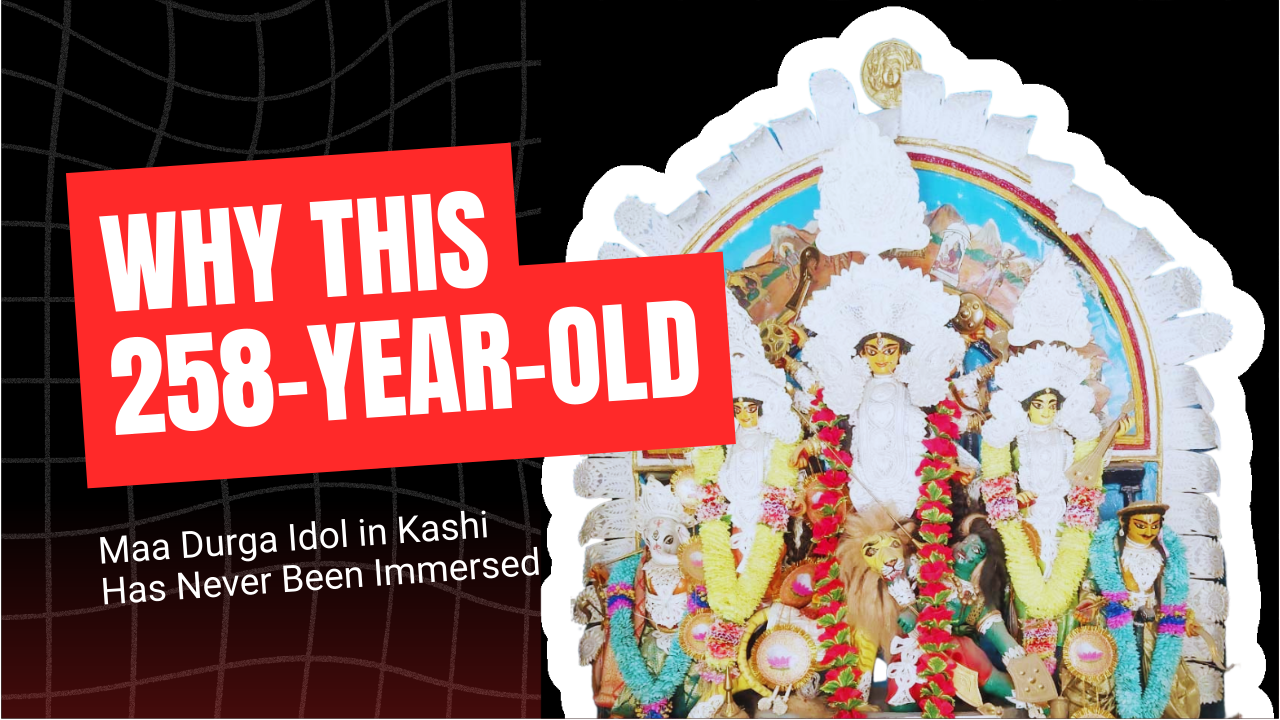
When Maa Durga’s Idol Did Not Move Even an Inch for Immersion in Kashi The idol has not been immersed for 258 years The Goddess appeared in a dream to the Mukherjee family, asking to remain in Kashi Varanasi. Kashi, the city of Lord Shiva, unique among all the three worlds, is filled with extraordinary mysteries. Resting upon the trident of Lord Shiva, this city has always attracted people with its remarkable miracles. Every year, people come here not only from across India but also from abroad after hearing about the power and miracles of its temples. Today, we introduce one such idol of Adishakti in Kashi. Located in the Jagambari, Madanpura area of Varanasi, this ancient temple, famous as the Old Durga Bari Temple, has remained a center of faith for devotees for centuries. The idol of the Goddess here has not been immersed for 258 years. When the Mukherjee family from West Bengal came to reside in Kashi, they installed the idol of Maa Durga during Durga Puja in the year 1767. On the day of immersion, the Goddess appeared in a dream to the head of the Mukherjee family and expressed her desire to remain there. Since then, this clay idol has remained established at the same place. The idol of Adishakti has been crafted in the Bangla Chala style. This idol of Maa Durga is made from ordinary straw, clay, bamboo, and jute twine, and appears extremely beautiful. The Goddess became so pleased with the worship and devotion of the Mukherjee family that she chose to reside there permanently. Even today, the seventh generation of the Mukherjee family continues to serve the Goddess with devotion. To the right of the idol of Maa Durga stands a black stone idol of Lord Vishnu, which is believed to date back to the 11th century. Even More Than 50 People Could Not Lift the Idol Members of the Mukherjee family residing in the temple premises stated that on Vijayadashami, when people attempted to lift the five-foot-tall idol for immersion, it did not move even an inch from its place. Initially, 15 to 20 people tried to lift the idol. Later, more than 50 people made the attempt, but they still could not move the idol of the Goddess even an inch from its place. On the night of the immersion, the Goddess appeared in a dream to the head of the Mukherjee family. She said that she was extremely pleased with their worship and wished to remain at the same place. Since then, this clay idol of the Goddess has remained enshrined there. Devotees Come from Far and Wide After Hearing of Her Glory After hearing about the glory of Adishakti Maa Durga, devotees from distant places come here during Navratri to seek the Goddess’s blessings. Although the Goddess is worshipped every day, special worship is performed for nine days during Navratri. Jaggery and roasted gram are especially dear offerings to Mata Rani. Devotees visiting from outside also offer roasted gram and jaggery in the temple premises while praying for the fulfillment of their wishes. It is believed that the Goddess fulfills every wish asked with a sincere heart in the temple. The temple remains open every day from 7:30 a.m. to 12:00 p.m. and again from 4:00 p.m. to 8:00 p.m.

Meet Sunil Lahri: The Banaras Animal Rescuer Who Has Saved 10,000+ Injured Animals in 30 Years

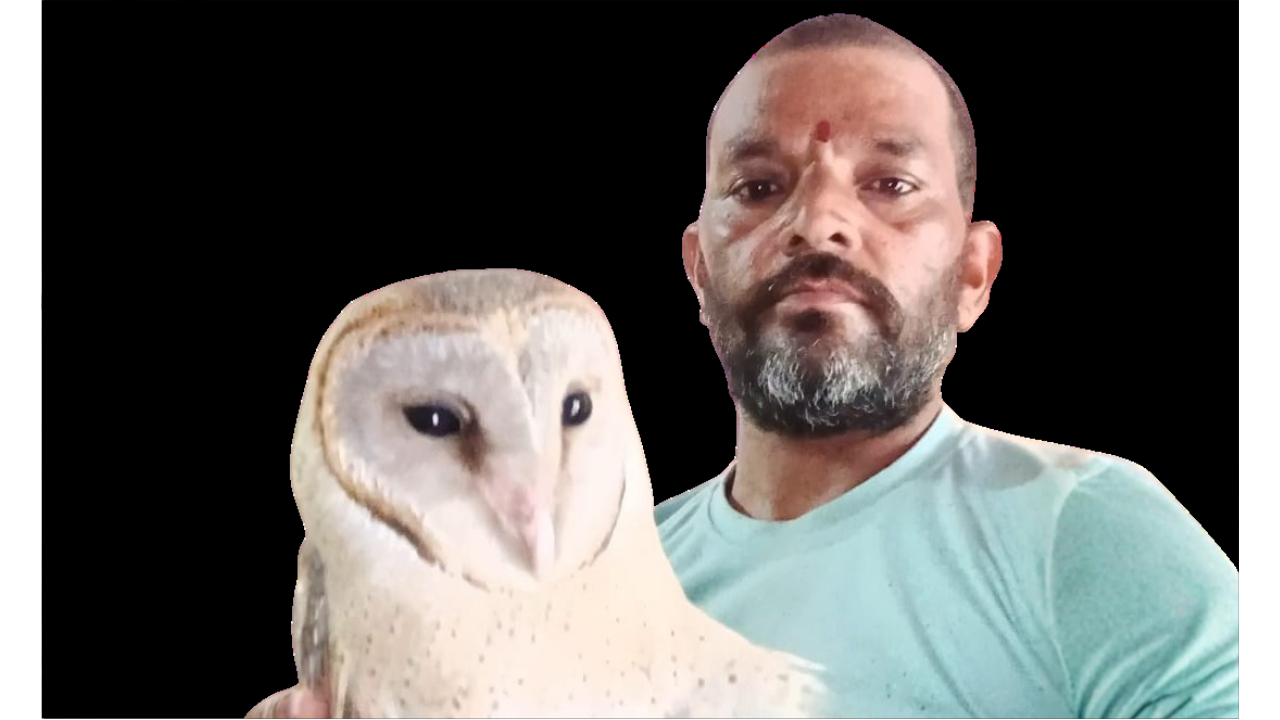
For 30 Years, Sunil Lahri Has Been the Voice of the Voiceless on the Streets of Banaras His heart melted after seeing an injured bull at the age of 15, and since then he has been devoted to serving animals The moment the phone rings, the orange bike ambulance rushes to every corner of the city A tripund on his forehead, a gamcha over his shoulder, and an old orange-colored motorcycle. Looking at Sunil Lahri in a crowd, no one would say that he is one of the most unique social workers in Banaras. Since the age of 15, he has been serving voiceless animals. For the past 30 years, he has been rescuing injured and helpless animals from the streets and providing them with treatment. Sunil’s motorcycle itself is his ambulance. The storage box carries medicines, bandages, husk, and a bag of biscuits. Written on the front of the bike are the words, “Service for Helpless and Injured Animals, Birds and Humanity.” That is his identity. The Story Began with a Bull Sunil says that when he was 15 years old, there was an injured bull lying in his neighborhood. He could not bear to see it suffering. For the first time, he gave the bull water, washed its wounds, and cleaned them. From that moment, a feeling of compassion for animals arose within him, and he has remained connected to serving voiceless creatures ever since. He could not continue his education for long. After completing the fifth standard, he began transporting goods on a trolley at Visheshwarganj Market. After spending the day serving helpless animals, he works in the market transporting goods in the evening. Whenever he spots an injured animal on the road or someone informs him about one, Sunil immediately reaches the location and begins serving the animal. No Degree, But Full of Determination “I don’t have any degree, sir,” Sunil says with a smile. “If I see a wound, I clean it. I apply medicine to help it heal. If the condition is serious, I call a doctor.” Seven years ago, someone threw acid on a Nandi bull. He dressed its wounds for months. When it finally recovered, he released it into the forest. He says, “If I had left it here, it would have been attacked again.” So far, he has served more than 10,000 animals. There is also a small shelter at Domri on the banks of the Ganga, where he treats seriously injured large animals. The Family Opposed Him at First, Now They Support Him Sunil says that whenever an animal was seriously ill, he had no place to keep it, so he would bring it home. On seeing the animals, his mother, Sonmati Devi, would say, “Why do you keep bringing animals home? There is hardly any space here.” Over time, the family also became involved in serving animals. One brother drives a trolley, while another is an auto-rickshaw driver. Both help Sunil financially in his work. Serving animals costs around ₹20,000 every month. Along with Ramji Seth and Keshav Seth, several other animal lovers also support him financially and encourage him to continue serving animals. When the Motorcycle Became an Ambulance Sunil, the friend of voiceless animals, initially served them by travelling on foot and using a trolley. Carrying injured animals from the streets was difficult. Seeing his selfless service, some people came forward to help and arranged a motorcycle for him. As soon as he got the bike, Sunil painted it completely orange. Today, that bright orange motorcycle has become his identity. The words “Service for Helpless and Injured Animals, Birds and Humanity” are written on the front, while the storage box always carries medicines, bandages, ointments, husk, and a bag of biscuits. Whether he receives a phone call from any corner of the city or notices an injured animal on the road, Sunil immediately rides out on his motorcycle. After reaching the spot, he first treats the animal’s wounds and then feeds any hungry animal. The motorcycle is no longer just a vehicle—it has become a moving ambulance on the streets of Banaras. From Sparrows to Peacocks, Every Animal Receives Treatment In the last thirty years, Sunil has treated sparrows, owls, vultures, mules, camels, monkeys, goats, dogs, cows, bulls, and even the national bird, the peacock. He says, “If there is still breath, I pick them up.” Seriously injured large animals are taken to the shelter of the “Helpless and Injured Animals, Birds and Public Service Committee” located at Domri Bandha, Padao. Sometimes it takes four to six months for an animal to recover. During that time, medicines, food, and daily care are provided. Once the animals recover, the larger animals are released into the forest, while the smaller ones are released in safe locations. He Learned the Spirit of Service from Ramji Seth Sunil says that Ramji Seth is his guru. Ramji Seth has been serving animals for 38 years and has rescued more than 6,000 voiceless animals. Due to old age, he now stays at the shelter and looks after the animals. Ramji Seth’s son, Keshav Seth, and the entire family stand by Sunil. Keshav says, “Sunil’s phone number is now known across Banaras. Calls come throughout the day. If Sunil is unavailable, then I, my brother, or my son reaches the spot.” At present, the shelter is treating a blind cow, a cow suffering from lumpy skin disease, an injured calf, and a baby monkey. Keshav says, “Sunil is fulfilling the unfinished dream of my father, Ramji Seth. All of us stand shoulder to shoulder with each other.

DIG Vaibhav Krishna Fulfills Tribal Women’s Dream of Visiting Kashi Vishwanath for the First Time

DIG Vaibhav Krishna’s Initiative Bears Fruit: Tribal Women Step Out of Their Village for the First Time to Visit Baba Vishwanath The dreams of women from Pandi village, surrounded by hills and forests in Naugarh Block of Chandauli district, came true Seeing a city for the first time brought tears of joy to their eyes, and they appreciated the DIG for fulfilling his promise Varanasi. In today’s modern and dazzling world, where people travel not only across the country but around the globe, there is a village in Uttar Pradesh’s Chandauli district where many residents have never gone beyond their own village. The long-cherished dream of 40 tribal women and 10 men from Pandi village, surrounded by hills and forests in Naugarh Block, came true through an initiative by DIG Vaibhav Krishna. When the women from the Naxal-affected village stepped onto the land of Kashi for the first time, they were overwhelmed with joy. On reaching the court of Baba Vishwanath for the first time, they were welcomed by the temple administration. Experiencing such hospitality for the first time, the happiness was clearly visible on the faces of the women. They offered prayers and performed worship at the Shri Kashi Vishwanath Temple. For the first time, the tribal women not only saw a city but also visited Kashi’s renowned temples. This journey of the tribal women was not merely a religious pilgrimage; it was the fulfillment of one of the biggest dreams of their lives. The Officer Was Moved After Hearing the Women’s Wish A few days ago, DIG of the Varanasi Range, Vaibhav Krishna, visited Pandi village. During his interaction with the village women, he casually asked where they would like to travel if they were given an opportunity. The women’s response moved the officers present there. The women said that they had never seen a city and that their greatest wish was to visit Baba Kashi Vishwanath, Sankat Mochan Temple, Durga Temple, and other prominent temples. Hearing this, the DIG immediately instructed the Chandauli Police to fulfill their wish under the Mission Shakti campaign. Following the instructions, a special police bus reached Pandi village. Forty women and ten men from the village were brought to Varanasi. To ensure security during the journey, two Inspectors and four Sub-Inspectors accompanied them. Chandauli Superintendent of Police Akash Patel said that all the devotees first offered prayers at the Shri Kashi Vishwanath Temple. After that, they were taken to Sankat Mochan Temple, Durga Kund Temple, and other major religious sites of Kashi. A Dream Cherished for Years Came True The women of the village said that they had never seen a city in their lives. Since childhood, they had wished to visit Baba Vishwanath at least once, but due to poor financial conditions and lack of resources, it had never been possible. They said that through the Mission Shakti campaign, their long-cherished wish had finally been fulfilled. Seeing the roads, temples, and vibrant atmosphere of Varanasi for the first time filled them with immense happiness. Pandi Village Lacks Basic Facilities Pandi village, located in the Naugarh region of Chandauli, still remains far removed from the mainstream of development. The village, home to around 80 families, faces a severe drinking water crisis during the summer months. When natural water sources dry up, villagers have to travel long distances to fetch water. Mobile network connectivity is almost nonexistent, affecting communication and leaving the villagers largely disconnected from the outside world. Most families depend on forest resources and daily wage labour for their livelihood. Due to limited income, even meeting everyday needs remains a challenge for them. Who Is the Honest IPS Officer Vaibhav Krishna? Vaibhav Krishna is a 2010-batch IPS officer. He completed his Mechanical Engineering from IIT Roorkee. Vaibhav Krishna secured the 86th rank. He is currently serving as the DIG of the Varanasi Range. He has earned a distinct identity as an honest police officer. He has been in the spotlight for fulfilling the promise he made to the tribal women of Pandi village, located in Naugarh Tehsil near the Bihar border, by taking them on a visit to Kashi under the Mission Shakti campaign on June 14.

How Manoj Yadav Educated 1,000+ Underprivileged Children Despite Leaving College Midway

The Degree Was Left Incomplete, But the Determination Never Broke: Manoj Lit the Lamp of Education in the Lives of Thousands of Children Has educated more than one thousand children so far; many children have passed High School and Intermediate examinations Also conducts online classes through YouTube and provides new and old clothes to underprivileged children Varanasi. Whether in a city or a village, you will find many people with degrees. But there is also a person whose own degree remained incomplete. Even so, he illuminated the lives of thousands of children through education. His name is Manoj Yadav. Children lovingly call him “Guruji.” Living in Ugapur, Pandapur of Cholapur, Manoj has become a ray of hope for those children who cannot even afford school fees. It was in 2013 that Manoj took admission in a graduation course at Banaras Hindu University. He loved studying and had a passion for moving ahead in life. But his pockets were empty. The financial difficulties were so severe that he had to leave his studies midway. His dream of earning a degree remained incomplete. Most people would have stopped there, but Manoj decided that what happened to him due to lack of money should not happen to anyone else. He resolved that no child in his neighborhood would have to leave studies midway because of financial hardship. And that is where the story began. The Classroom Began in the Lanes of a Slum Manoj’s journey was not easy. In the beginning, he had neither benches nor a blackboard to teach children. He gathered children who could not attend school and started teaching them. He taught whatever he knew—Hindi, Mathematics, and English. The fee for his classes was zero. Manoj himself was not financially stable. Despite this, he made every possible effort to light the lamp of education in the lives of poor children around him. His wife Anita supported him wholeheartedly throughout this journey. Anita said, “We may eat less, but we will definitely provide education to children.” That support gave Manoj the courage to continue. What started with one or two children is now transforming the lives of thousands. Manoj says that more than 1,000 children have been associated with him so far. Many of them had never even seen the inside of a school. Manoj taught them, guided them, and got them admitted to government schools. Today, many of those children have passed High School. Some have even completed Intermediate education. One child who could never afford a notebook or pencil is now topping Intermediate examinations. For Manoj, that is the greatest degree of all. Along with Education, He Also Demonstrated Humanity Manoj’s work is not limited to the classroom. When he visits slum settlements and sees children in torn clothes, his heart melts. Along with education, he also made arrangements to clothe the children. He encourages people to donate old clothes for children. Along with collecting used clothes from people, he also buys new clothes for children during festivals. Especially during winters, he visits slum areas and arranges warm clothes for children. Classes Also Run on YouTube Manoj’s classes are now conducted on YouTube as well. As times changed, Manoj adapted too. When mobile phones and the internet became common, he created a YouTube channel. Now, even a child from a remote village can watch his lectures. His online classes maintain the same style—simple language and everyday examples. There are no technical terms, making it easy for children to understand. When a child asks a question in the comments section, Manoj responds through a video. Technology has taken his classroom from the lanes of a slum to the entire state of Uttar Pradesh. Educational Tours for Awareness Social worker Manoj’s goal is not only to provide basic education to children. To help High School and Intermediate students studying in slum settlements fulfill their dreams, he also introduces them to the outside world. For educational tours, he often takes children not only around his city but also to other states. He mostly brings children to Banaras Hindu University by bus. There, he encourages them to pursue higher education and motivates them to study in institutions like BHU. After these educational tours, children become even more enthusiastic about completing their studies. No Big Support, Just a Big Intention Manoj says that when intentions are pure, every destination becomes easier to reach. He believes that society can change only through education. Every poor and deprived person has a right to education. To ensure that children do not face obstacles in education, he has launched a campaign encouraging people to donate ₹100 every month for education. Financial support received from donors also helps in the education of children. He firmly believes that society will change only through education. “I do not have a degree, but sharing knowledge does not reduce knowledge.” Today, Manoj Yadav may not have a paper degree, but he possesses the degree of blessings from thousands of children. People in Cholapur call him “Guruji.” A child who could never even imagine going to school now looks at Manoj and says, “I will study too.” His degree remained incomplete, but his determination never broke. That same determination has rebuilt hundreds of broken dreams. Perhaps this is true education—that a person who could not complete his own studies helps others to study.

Kashi’s “Cow Baba” Has Been Feeding Stray Cows for Years. Now He Needs Support for an Electric Toto Vehicle.

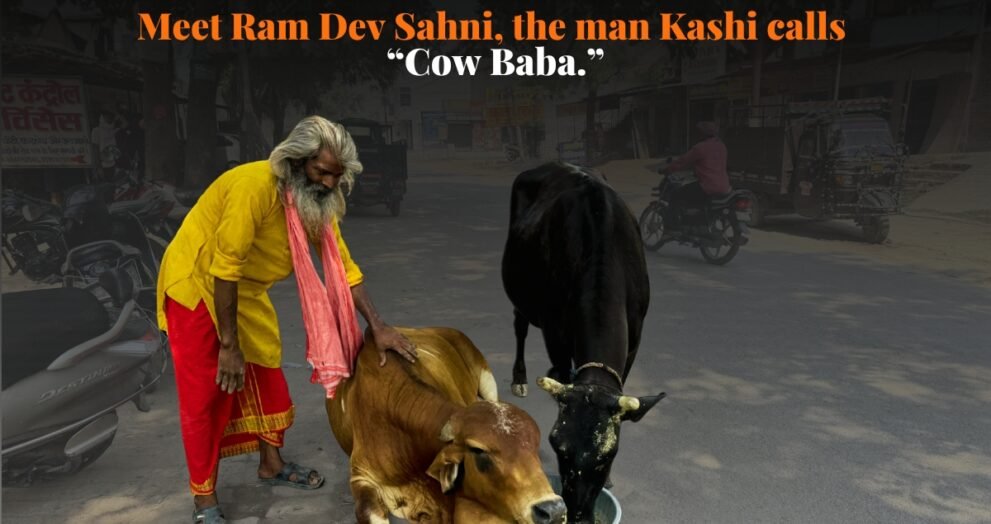
Every day, before much of the city wakes up, Ram Dev Sahni begins a journey that few people notice. Armed with bundles of fodder, containers of water, and an unwavering sense of compassion, he travels through the streets of Kashi looking for one thing, hungry cows. Over the years, people have come to know him by a different name: “Cow Baba.” Not because he sought recognition, but because he chose service. A Daily Mission of Compassion Across India, cows are revered as Gau Mata. Yet, on the streets, their reality is often very different. Many wander through busy roads searching for food. Some survive by eating waste from garbage dumps. Others consume plastic bags mixed with food scraps, causing severe health problems. Many are injured, neglected, or chased away. Ram Dev Sahni witnessed this suffering firsthand. Instead of looking away, he decided to do something about it. For years, he has been arranging fodder from wherever possible and personally feeding cows across different parts of Kashi. During the scorching summer months, he also carries water and places containers so that animals can drink and find relief from the heat. Service That Comes at a Cost What makes this effort even more remarkable is that Ram Dev does not own a vehicle for this seva. Every day, he rents an auto-rickshaw to transport fodder and water. The expenses continue to rise. Fuel costs, vehicle rental charges, fodder expenses, and daily operational costs make it increasingly difficult to sustain this mission. Yet he continues. Not because it is easy. But because he believes that these voiceless beings deserve care. A Simple Need That Can Create Bigger Impact Today, Ram Dev Sahni has one simple wish. He hopes to receive support for a small electric Toto vehicle. With an electric vehicle, he would be able to: A Toto vehicle would not only support him, it would directly support hundreds of cows who depend on these daily feeding efforts. Why This Matters Many people talk about compassion. Few practice it every day. For years, Ram Dev Sahni has quietly transformed compassion into action. No cameras. No expectations. No rewards. Just a commitment to serve. At Humans of Kashi, we had the opportunity to witness his journey and understand the challenges he faces. His dedication moved us deeply. We believe that with the right support, his impact can grow significantly and reach even more animals in need. How You Can Help ShivDhaam Foundation is working to support this noble initiative and help arrange an electric Toto vehicle that can make this seva more sustainable. Your contribution, no matter how small, can help ensure that this mission continues. By supporting one person dedicated to serving cows, you are helping countless animals receive food, water, and care. Support This Cause If this story touched your heart and you would like to support Cow Baba’s mission, we invite you to contribute towards arranging an electric Toto vehicle for his daily seva. Every contribution brings us one step closer to helping him continue this journey with greater reach and impact. 👇 Click the link below to support this campaign through ShivDhaam Foundation. [Support Cow Baba’s Electric Toto Vehicle Campaign] Together, we can help compassion travel farther. Because sometimes, changing lives begins with helping those who dedicate their lives to serving others.

An Artist Who Finds Value Where Others See Waste

Raj Kumar ji: An Artist Who Finds Value Where Others See Waste

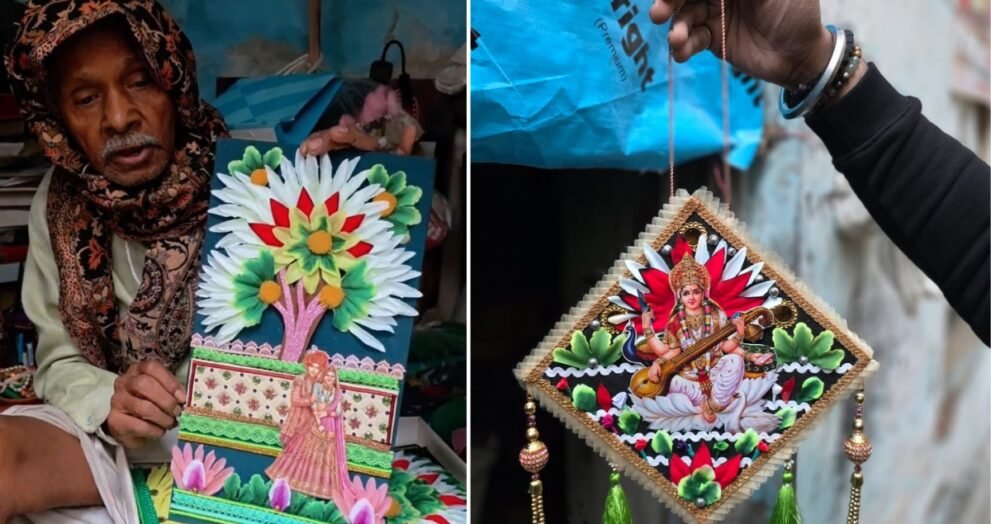
In a world that is quick to discard the old and chase the new, a quiet artist in Varanasi is doing the opposite. At 75, Raj Kumar ji spends his days giving forgotten things a second life i.e. wedding cards, broken bangles, scraps of paper and objects most people would throw away without a second thought. For Raj Kumar ji, nothing is ever useless. It only waits for the right imagination. What looks like waste to the world becomes raw material in his hands. With patience and devotion, he cuts, folds, layers and transforms discarded items into intricate artworks like temples, palaces, boats and divine forms that feel alive with emotion. A Childhood of Creativity, A Lifetime of Belief Raj Kumar ji’s journey did not begin in galleries or art schools. It began in childhood curiosity. While others focused on textbooks, he was drawn to shapes, textures and possibilities hidden in everyday objects. That curiosity often invited scolding rather than encouragement, but it never left him. “I never learned this from anywhere. It’s God’s gift. Nature’s gift.” he says simply. There were no formal lessons, no techniques taught only observation, intuition and faith. Over decades, that instinct grew into a language of its own. Each piece he creates is guided not by rules, but by feeling. One artwork might begin as a wedding card once a symbol of celebration, now forgotten. Under his hands, it becomes the image of Lord Krishna, complete with expressions, ornaments and stories folded into every detail. Even a cow, sacred and serene, emerges from layers of old paper which is carefully cut, shaped and brought to life. More Than Art, A Way of Seeing For Raj Kumar ji, this is not a hobby or pastime. It is a philosophy. A reminder that value is not fixed, it is discovered. His work quietly challenges the idea of waste. It asks a simple question: what if we looked again? What if what we throw away still has something to say? In a time of overflowing landfills and fast consumption, his art offers a gentler lesson. Sustainability does not always come from large systems or big solutions. Sometimes, it begins with one person choosing not to throw something away. Creativity Has No Age Perhaps the most powerful part of Raj Kumar ji’s story is not the art itself, but the life behind it. At 75, he continues to create every day proving that creativity does not retire. Inspiration does not fade with age. And purpose does not have an expiry date. He teaches us that imagination can be found anywhere it can be in an old card, a broken bangle, a discarded piece of paper. All it needs is attention. Where people see trash, Raj Kumar ji sees stories waiting to be told. Because for him, every fragment holds a new thought, a new form and a new life.

A Varanasi Family’s Quiet Green Revolution

From Kitchen Waste to Black Gold: A Varanasi Family’s Quiet Green Revolution

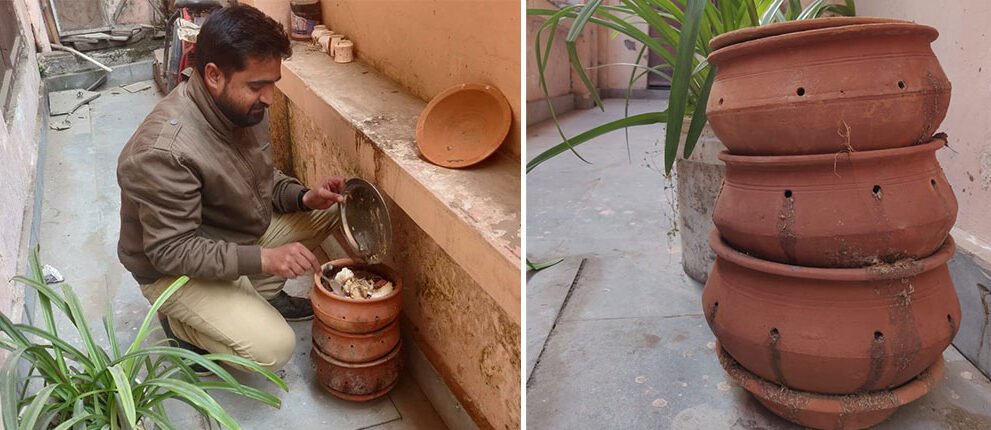
In a city known for ancient rituals and timeless traditions, a quiet transformation is taking place inside a modest household in Varanasi. While most of the city’s waste travels long distances to landfills, Kuldeep Choudhary’s family has found a way to stop garbage at its source i.e. their own kitchen. What makes their story powerful is not technology or investment, but intent. Fruit peels, vegetable scraps, tea leaves, leftover food and garden trimmings no longer end up in overflowing bins. Instead, they are turned into something valuable which is nutrient-rich compost, often called black gold. Learning to Rethink Waste Kuldeep Choudhary, a resident of Shivpurwa Ward Near Sigra, did not start as an expert in waste management. His journey began when a team from the Varanasi Municipal Corporation (VMC) visited his neighbourhood as part of a door-to-door awareness campaign on home composting. Trained by the VMC team under the Waste NAMA (Nationally Appropriate Mitigation Action) project, Kuldeep learned how microbial cultures prepared by using cow dung can naturally decompose organic waste. With a little guidance and a lot of curiosity, he decided to try composting at home. Using a three-layer earthen pot composter which was made locally and set up inside his house, Kuldeep and his family began managing their wet waste themselves. When Patience Turns Waste into Wealth Composting is not instant. It demands patience, care and consistency. Over time, the family watched their everyday waste slowly transform into dark brown, crumbly compost with the smell of fresh earth. This compost now nourishes their home garden, where vegetables, flowering plants and herbs grow without chemical fertilizers. The family’s dependence on store-bought fertilizers has reduced and the soil has become healthier with every cycle. What was once seen as garbage has now become a resource which now feeds plants, improves soil health and closes the loop between consumption and care. Impact Beyond One Household The impact of this simple practice did not stop at Kuldeep’s doorstep. Neighbours began noticing the change i.e. fewer smells, cleaner surroundings and a household that produced almost no wet waste for collection. Inspired, many families in the colony started composting themselves. Slowly, the volume of waste collected from the area began to reduce. This meant fewer trips for waste transportation and a lower burden on the municipal system. With less waste reaching landfills, the potential emission of greenhouse gases such as methane also reduced proving that climate action does not always require large-scale projects. Sometimes, it begins at home. A Win for Waste Collectors and Potters Segregation of waste also improved the lives of others in the system. The dry waste which is now clean and recyclable became more valuable for informal waste collectors. With better segregation, they could recover more recyclables and earn more from their work. Unexpectedly, this movement also supported local potters. Earthen composters, used as small bio-reactors, revived demand for traditional pottery. In a time when many potters struggle to keep their craft alive, composting products brought dignity and income back into their hands. What began as a sustainability practice quietly strengthened livelihoods and cultural crafts. A Model for Kashi’s Future Kuldeep Choudhary’s family proves that waste management does not always need large infrastructure. Decentralized home composting can significantly reduce the pressure on cities like Varanasi, where waste generation is growing rapidly. Their story shows that sustainability is not about perfection, it is about participation. About choosing responsibility over convenience. About seeing waste not as a burden, but as a resource. Small Actions, Lasting Change In Kashi, where cycles of life and death are deeply understood, this family reminds us of another cycle that is of renewal. What we discard can return as nourishment. What we waste can become wealth. Sometimes, gold isn’t mined. It’s composted.

Swad-e-Banaras, Wrapped in a Leaf

Banarasi Paan: Swad-e-Banaras, Wrapped in a Leaf

There are cities you visit and then there are cities you taste. Banaras belongs to the second kind. Here, flavours are not just cooked they are lived, offered and remembered. Among all that Banaras gives the world – temples, ghats, music, silk and there is one humble pleasure that quietly holds the city’s soul together: Banarasi Paan. More than a mouth freshener, paan in Banaras is a ritual, a conversation and a way of being. To understand Banaras, you must understand the leaf. What Makes Banarasi Paan Different Banarasi paan is made using the Banaras Pan betel leaf, a variety cultivated in and around Varanasi and neighbouring districts such as Jaunpur, Ghazipur, Mirzapur and Chandauli. In 2023, this betel leaf received the Geographical Indication (GI) tag, legally recognising its unique origin and quality. The leaf itself is soft, glossy, aromatic and rich in natural oils. Unlike tougher varieties found elsewhere, Banarasi paan leaves fold gently and carry flavours beautifully from mild sweetness to a warm, lingering sharpness. Traditionally, the paan includes:             •           Betel leaf             •           Chuna (slaked lime)             •           Katha (catechu extract)             •           Areca nut             •           Optional natural flavourings like fennel, rose petal preserve, cardamom or saffron The magic lies in balance. Banarasi paan is never aggressive. It is subtle, measured and respectful much like the city itself. A Ritual Rooted in Faith and Daily Life In Banaras, paan is not eaten only after meals. It appears everywhere in temples, homes, weddings and street corners. Paan is considered auspicious in Hindu rituals and is often offered to deities during puja. It symbolises prosperity, respect and completion. No major ceremony from marriage to housewarming feels complete without it. But beyond rituals, paan is also deeply social. A paan shop in Banaras is not just a stall; it is a meeting point. People pause here after work, after a ghat walk, after a long thought. Conversations begin and end over folded leaves. News travels faster through paanwalas than through newspapers. The Craft of the Paanwala Every Banarasi paanwala is an artisan. Watch closely and you’ll see that paan-making is not rushed. The leaf is examined, cleaned, layered carefully, folded with precision and handed over with quiet pride. Many paan shops in Banaras are family-run with techniques passed down orally no written recipes, no shortcuts. Some shops have existed for decades, even centuries. Their fame spreads not through advertising but through memory “Us gali ke kone par jo paan milta hai…” Each paanwala adjusts the flavour to the person standing in front of them. Less chuna. More sweetness. Mild or sharp. In Banaras, paan is personal. From Royal Courts to Cinema Songs Historically, paan enjoyed royal patronage. Ancient Indian texts and medieval records mention betel leaves being served with rosewater, spices and perfumes in royal courts. In popular culture, Banarasi paan became immortal through music and cinema most famously in the song “Khaike Paan Banaras Wala”, which turned paan into a symbol of desi pride and playful rebellion. Yet despite fame and modern variations, the heart of Banarasi paan remains unchanged – simple, handcrafted and deeply local. Sweet, Saada and Seasonal Variations While the classic saada paan remains the most respected form in Banaras, the city also embraces gentle innovation. During festivals and winters, you may find paan infused with:             •           Gulkand             •           Dry fruits             •           Saffron             •           Natural essences What Banaras avoids is excess. Unlike flashy, heavily loaded versions found elsewhere, Banarasi paan values restraint. The leaf leads; the flavours follow. Paan as Economy, Identity and Livelihood Banarasi paan is not just culture – it is livelihood. Thousands of farmers cultivate betel leaves under carefully controlled shade conditions. Traders, transporters and paanwalas form a complete ecosystem that supports local economies. The GI tag has further strengthened this network by protecting authenticity and improving market recognition. In a changing city, paan remains one of the few traditions where urban life, agriculture, ritual and commerce still move together. Why Banarasi Paan Still Matters In an age of fast food and faster consumption, Banarasi paan asks you to slow down. It asks you to pause, chew, taste and reflect. Perhaps that is why paan survives in Banaras because the city itself refuses to hurry. It believes in afterthoughts, not endings. In conversations that linger. In flavours that stay. Banarasi paan is not about indulgence. It is about closure. A meal ends. A meeting ends. A walk ends. But something remains on the tongue, in the mind. That is Swad-e-Banaras.

Where Life End and Liberation Begins

Manikarnika Ghat: Where Life End and Liberation Begins

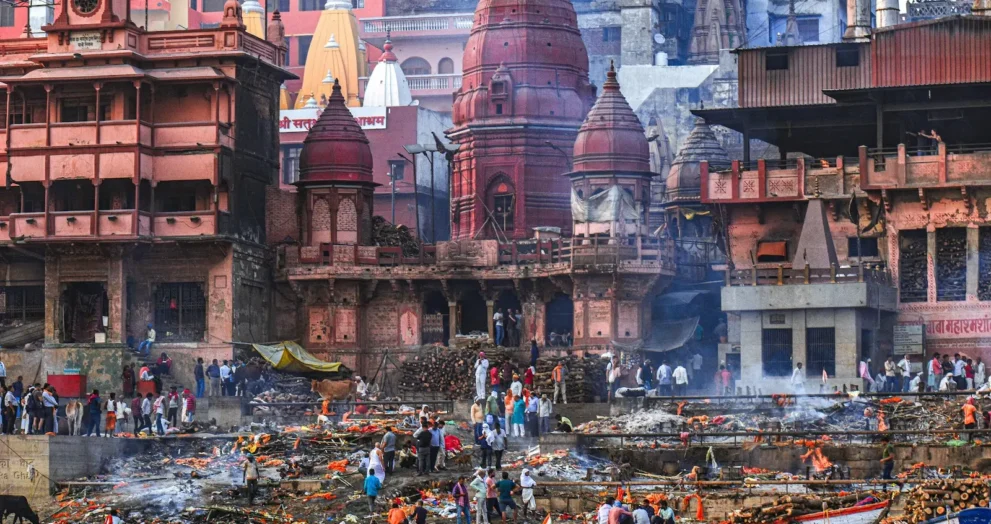
In the sacred geography of Kashi, there is one place where time seems to stand still, where fire never sleeps and where humanity confronts its ultimate truth. Manikarnika Ghat is not just a cremation ground; it is a living philosophy. Here, death is not feared or hidden. It is accepted, witnessed and understood as a passage toward liberation. Located on the banks of the Ganga in Varanasi, Manikarnika Ghat is considered one of the holiest places in Hinduism. For centuries, this ghat has remained active day and night, bearing silent testimony to the belief that the end of the body is the beginning of freedom for the soul. The Mythological Origins of Manikarnika The story of Manikarnika is deeply rooted in Hindu mythology. One widely believed legend says that Lord Vishnu dug a sacred kund here using his chakra while Lord Shiva watched over him. During this time, an earring of Goddess Parvati is believed to have fallen into the kund, giving the ghat its name. The Manikarnika Kund still exists today, considered one of the oldest sacred water bodies in the city. Another belief holds that Lord Shiva personally grants moksha here by whispering the Tarak Mantra into the ears of the departing soul. This faith has drawn countless devotees to wish that their final rites be performed at this ghat, believing it frees them from the cycle of birth and rebirth. The Eternal Fire and the Ritual of Cremation One of the most striking features of Manikarnika Ghat is the eternal funeral fire, known as the Akhand Chita. It is believed that this fire has been burning continuously for thousands of years. Every cremation fire at the ghat is lit from this sacred flame symbolizing continuity beyond time. Cremation rituals here are conducted with precision and deep spiritual meaning. Wood is weighed, rituals are performed, mantras are chanted and families participate with devotion rather than despair. The rituals are traditionally managed by the Dom community who have safeguarded this sacred duty for generations. Unlike elsewhere, death at Manikarnika is not an event of mourning alone; it is a moment of surrender and release. The crackling of wood, the flowing river and the chanting of prayers together form a powerful reminder of life’s impermanence. A Philosophy of Life and Death Manikarnika Ghat teaches one of Kashi’s greatest lessons: nothing is permanent. Kings and commoners, saints and sinners, rich and poor all meet the same end here. This stark equality strips life down to its essence and encourages reflection rather than fear. Visitors often describe the ghat as overwhelming at first, but deeply transformative once understood. It is a place that compels silence, introspection and humility. Many believe that witnessing cremation here is itself a spiritual experience, reminding one to live meaningfully and without attachment. Manikarnika in Modern Times Despite centuries passing, Manikarnika Ghat remains unchanged in its purpose. While Varanasi modernizes around it, the ghat continues its ancient rhythm uninterrupted. Photography is restricted, respect is expected and visitors are encouraged to observe quietly and sensitively. For travellers, it is not a tourist attraction but a place of understanding. For believers, it is the final destination. For Kashi, it is the eternal heart where the city’s spiritual promise is fulfilled daily. Why Manikarnika Ghat Matters Today In a world that often avoids conversations about death, Manikarnika Ghat stands as a reminder that acceptance brings peace. It teaches that liberation lies not in denial, but in understanding the cycle of existence. Kashi is believed to be the city where death loses its fear and Manikarnika is where that belief becomes visible. Here, flames rise, ashes return to the Ganga and souls are believed to find freedom. Not in silence, but in sacred continuity.

Banaras’ Winter Whisper That Melts Before You Blink

Malaiyo: Banaras’ Winter Whisper That Melts Before You Blink

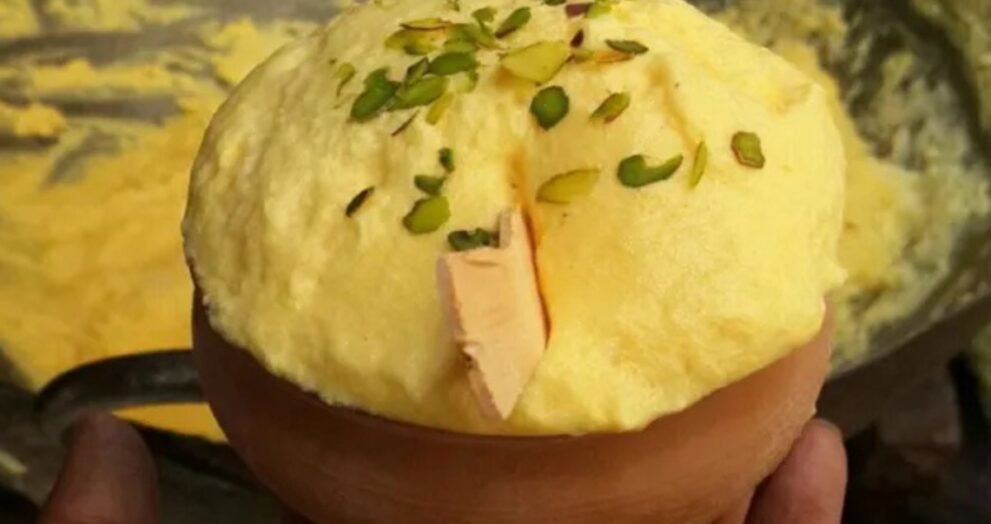
Banaras has a way of expressing itself softly. Not everything here announces its presence with sound or spectacle. Some traditions arrive quietly, stay briefly and leave behind a lasting memory. Malaiyo is one such delicacy, a winter dessert so light and fleeting that it feels less like food and more like an experience. Found only in the colder months, Malaiyo is not meant to last long. It appears with the morning mist and vanishes with the rising sun, much like the dew it depends on. What Is Malaiyo and Why Is It So Special? Malaiyo, also known as Makhan Malai is a traditional sweet from Varanasi made primarily from milk, sugar and natural flavourings like saffron and cardamom. What sets it apart is its texture i.e. airy, cloud-like and impossibly soft. It melts almost instantly on the tongue, leaving behind a gentle sweetness. Unlike modern desserts that rely on refrigeration or machinery, Malaiyo is deeply connected to nature. The process traditionally involves exposing sweetened milk cream to the cold winter air overnight. The morning dew and low temperature play a crucial role in giving Malaiyo its signature lightness. This natural dependence is why the dessert cannot be replicated outside winter or beyond Banaras with the same authenticity. A Century-Old Tradition at Shreeji Malaiyo In the narrow lanes of Chowk, Shreeji Malaiyo stands as a quiet guardian of this fading tradition. Long before food blogs and viral reels, this family-run shop was crafting Malaiyo with patience and devotion. For over a hundred years, the recipe has been passed down not through written notes, but through observation, memory and practice. There are no shortcuts here. The process begins before dawn, when the city is still half-asleep. Watching Malaiyo being prepared is almost meditative i.e. slow whisking, careful folding, saffron infusing warmth into the pale froth and crushed pistachios sprinkled gently on top. It feels ceremonial, as if the dessert is being offered rather than sold. Why Malaiyo Exists Only in Winter Malaiyo’s fragility is its identity. The dessert relies on cold air and dew, making winter mornings essential. As temperatures rise, the froth collapses and the magic disappears. This natural limitation has kept Malaiyo immune to mass production. In a world chasing year-round availability, Malaiyo reminds us that some things are precious precisely because they are temporary. You cannot store it, export it, or rush it. You must come to Banaras, wake up early and experience it fresh. More Than a Dessert, a Feeling The first spoonful of Malaiyo feels almost unreal. There is no bite, no resistance just softness dissolving into sweetness. It carries the spirit of Banaras itself: ancient yet gentle, spiritual yet deeply human. Malaiyo does not overpower. It whispers. And in that whisper, you taste patience, heritage and a city that still believes in doing things slowly. Shreeji Malaiyo is not just serving dessert. It is serving memory, devotion and the soul of Banaras, one delicate bowl at a time.