

There are cities you visit and then there are cities you taste.
Banaras belongs to the second kind.
Here, flavours are not just cooked they are lived, offered and remembered. Among all that Banaras gives the world – temples, ghats, music, silk and there is one humble pleasure that quietly holds the city’s soul together: Banarasi Paan.
More than a mouth freshener, paan in Banaras is a ritual, a conversation and a way of being. To understand Banaras, you must understand the leaf.
What Makes Banarasi Paan Different
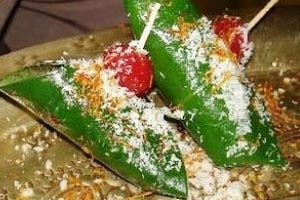
Banarasi paan is made using the Banaras Pan betel leaf, a variety cultivated in and around Varanasi and neighbouring districts such as Jaunpur, Ghazipur, Mirzapur and Chandauli. In 2023, this betel leaf received the Geographical Indication (GI) tag, legally recognising its unique origin and quality.
The leaf itself is soft, glossy, aromatic and rich in natural oils. Unlike tougher varieties found elsewhere, Banarasi paan leaves fold gently and carry flavours beautifully from mild sweetness to a warm, lingering sharpness.
Traditionally, the paan includes:
• Betel leaf
• Chuna (slaked lime)
• Katha (catechu extract)
• Areca nut
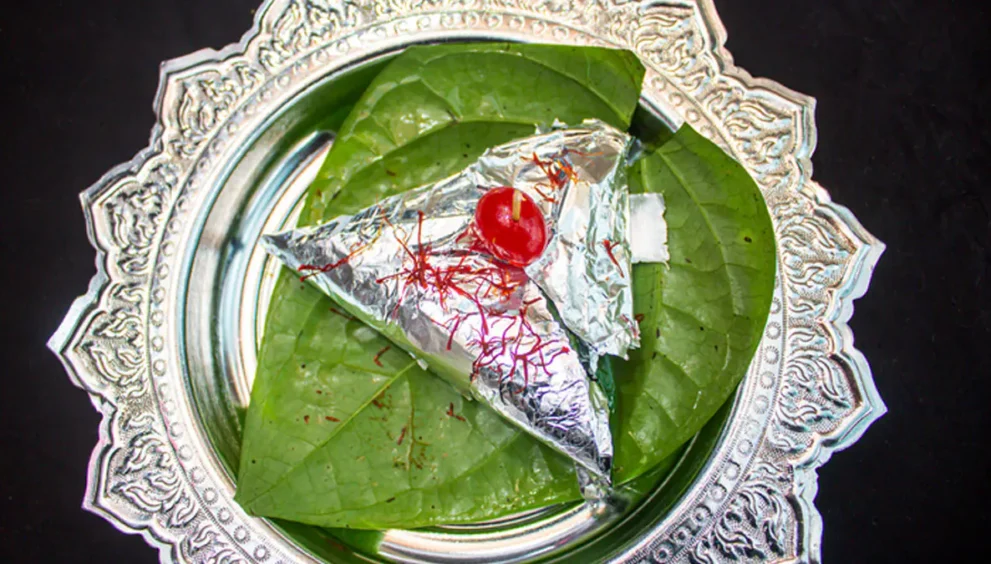
• Optional natural flavourings like fennel, rose petal preserve, cardamom or saffron
The magic lies in balance. Banarasi paan is never aggressive. It is subtle, measured and respectful much like the city itself.
A Ritual Rooted in Faith and Daily Life
In Banaras, paan is not eaten only after meals. It appears everywhere in temples, homes, weddings and street corners.
Paan is considered auspicious in Hindu rituals and is often offered to deities during puja. It symbolises prosperity, respect and completion. No major ceremony from marriage to housewarming feels complete without it.
But beyond rituals, paan is also deeply social.
A paan shop in Banaras is not just a stall; it is a meeting point. People pause here after work, after a ghat walk, after a long thought. Conversations begin and end over folded leaves. News travels faster through paanwalas than through newspapers.
The Craft of the Paanwala
Every Banarasi paanwala is an artisan.
Watch closely and you’ll see that paan-making is not rushed. The leaf is examined, cleaned, layered carefully, folded with precision and handed over with quiet pride. Many paan shops in Banaras are family-run with techniques passed down orally no written recipes, no shortcuts.
Some shops have existed for decades, even centuries. Their fame spreads not through advertising but through memory “Us gali ke kone par jo paan milta hai…”
Each paanwala adjusts the flavour to the person standing in front of them. Less chuna. More sweetness. Mild or sharp. In Banaras, paan is personal.
From Royal Courts to Cinema Songs
Historically, paan enjoyed royal patronage. Ancient Indian texts and medieval records mention betel leaves being served with rosewater, spices and perfumes in royal courts.
In popular culture, Banarasi paan became immortal through music and cinema most famously in the song “Khaike Paan Banaras Wala”, which turned paan into a symbol of desi pride and playful rebellion.
Yet despite fame and modern variations, the heart of Banarasi paan remains unchanged – simple, handcrafted and deeply local.
Sweet, Saada and Seasonal Variations
While the classic saada paan remains the most respected form in Banaras, the city also embraces gentle innovation.
During festivals and winters, you may find paan infused with:
• Gulkand
• Dry fruits
• Saffron
• Natural essences
What Banaras avoids is excess. Unlike flashy, heavily loaded versions found elsewhere, Banarasi paan values restraint. The leaf leads; the flavours follow.
Paan as Economy, Identity and Livelihood
Banarasi paan is not just culture – it is livelihood.
Thousands of farmers cultivate betel leaves under carefully controlled shade conditions. Traders, transporters and paanwalas form a complete ecosystem that supports local economies. The GI tag has further strengthened this network by protecting authenticity and improving market recognition.
In a changing city, paan remains one of the few traditions where urban life, agriculture, ritual and commerce still move together.
Why Banarasi Paan Still Matters
In an age of fast food and faster consumption, Banarasi paan asks you to slow down.
It asks you to pause, chew, taste and reflect.
Perhaps that is why paan survives in Banaras because the city itself refuses to hurry. It believes in afterthoughts, not endings. In conversations that linger. In flavours that stay.
Banarasi paan is not about indulgence. It is about closure.
A meal ends. A meeting ends. A walk ends.
But something remains on the tongue, in the mind. That is Swad-e-Banaras.