
Moksha in Varanasi | Humans of Kashi
Where Life End and Liberation Begins

Manikarnika Ghat: Where Life End and Liberation Begins

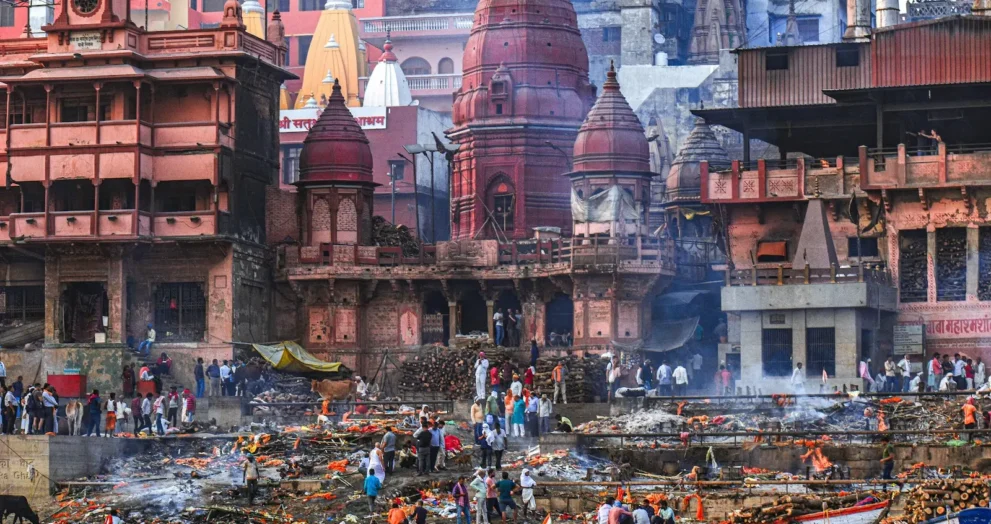
In the sacred geography of Kashi, there is one place where time seems to stand still, where fire never sleeps and where humanity confronts its ultimate truth. Manikarnika Ghat is not just a cremation ground; it is a living philosophy. Here, death is not feared or hidden. It is accepted, witnessed and understood as a passage toward liberation. Located on the banks of the Ganga in Varanasi, Manikarnika Ghat is considered one of the holiest places in Hinduism. For centuries, this ghat has remained active day and night, bearing silent testimony to the belief that the end of the body is the beginning of freedom for the soul. The Mythological Origins of Manikarnika The story of Manikarnika is deeply rooted in Hindu mythology. One widely believed legend says that Lord Vishnu dug a sacred kund here using his chakra while Lord Shiva watched over him. During this time, an earring of Goddess Parvati is believed to have fallen into the kund, giving the ghat its name. The Manikarnika Kund still exists today, considered one of the oldest sacred water bodies in the city. Another belief holds that Lord Shiva personally grants moksha here by whispering the Tarak Mantra into the ears of the departing soul. This faith has drawn countless devotees to wish that their final rites be performed at this ghat, believing it frees them from the cycle of birth and rebirth. The Eternal Fire and the Ritual of Cremation One of the most striking features of Manikarnika Ghat is the eternal funeral fire, known as the Akhand Chita. It is believed that this fire has been burning continuously for thousands of years. Every cremation fire at the ghat is lit from this sacred flame symbolizing continuity beyond time. Cremation rituals here are conducted with precision and deep spiritual meaning. Wood is weighed, rituals are performed, mantras are chanted and families participate with devotion rather than despair. The rituals are traditionally managed by the Dom community who have safeguarded this sacred duty for generations. Unlike elsewhere, death at Manikarnika is not an event of mourning alone; it is a moment of surrender and release. The crackling of wood, the flowing river and the chanting of prayers together form a powerful reminder of life’s impermanence. A Philosophy of Life and Death Manikarnika Ghat teaches one of Kashi’s greatest lessons: nothing is permanent. Kings and commoners, saints and sinners, rich and poor all meet the same end here. This stark equality strips life down to its essence and encourages reflection rather than fear. Visitors often describe the ghat as overwhelming at first, but deeply transformative once understood. It is a place that compels silence, introspection and humility. Many believe that witnessing cremation here is itself a spiritual experience, reminding one to live meaningfully and without attachment. Manikarnika in Modern Times Despite centuries passing, Manikarnika Ghat remains unchanged in its purpose. While Varanasi modernizes around it, the ghat continues its ancient rhythm uninterrupted. Photography is restricted, respect is expected and visitors are encouraged to observe quietly and sensitively. For travellers, it is not a tourist attraction but a place of understanding. For believers, it is the final destination. For Kashi, it is the eternal heart where the city’s spiritual promise is fulfilled daily. Why Manikarnika Ghat Matters Today In a world that often avoids conversations about death, Manikarnika Ghat stands as a reminder that acceptance brings peace. It teaches that liberation lies not in denial, but in understanding the cycle of existence. Kashi is believed to be the city where death loses its fear and Manikarnika is where that belief becomes visible. Here, flames rise, ashes return to the Ganga and souls are believed to find freedom. Not in silence, but in sacred continuity.
Keepers of the Sacred Fire at Kashi’s Eternal Ghats

Dom Community of Varanasi: Keepers of the Sacred Fire at Kashi’s Eternal Ghats

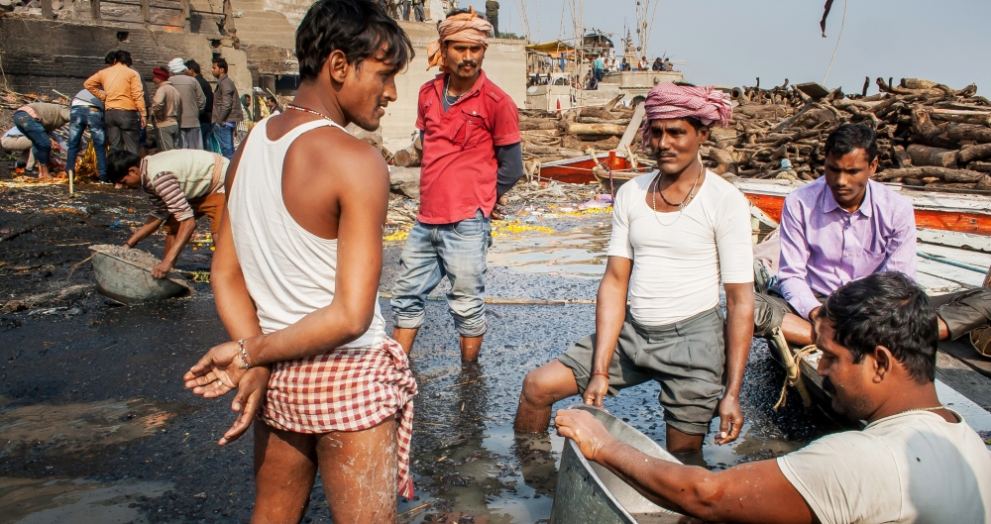
Varanasi, the spiritual heart of India is known for its temples, ghats, chants and the promise of moksha. Yet, behind the rituals of liberation stands a community whose role is indispensable to Kashi’s sacred rhythm the Dom community of Varanasi. For centuries, the Doms have carried the responsibility of tending the funeral pyres at Manikarnika Ghat and Harishchandra Ghat, ensuring that the ancient cycle of life and death continues uninterrupted. Who Are the Doms of Varanasi? The Dom community belongs to a Scheduled Caste group traditionally associated with cremation work in Hindu society. In Varanasi, their presence is deeply intertwined with religious belief. According to long-standing tradition, the sacred fire for cremation must be lit by a Dom without which the final rites are considered incomplete for attaining moksha. Despite their central spiritual role, the community has historically faced social stigma and exclusion. Ironically, those believed to help souls attain liberation often remain marginalized in everyday life. Life and Work at the Cremation Ghats Manikarnika Ghat regarded as the holiest cremation ground in Hinduism, funeral pyres burn day and night. The Doms manage every aspect of the cremation process: arranging wood, lighting pyres, maintaining the eternal flame and guiding grieving families through rituals. This work is physically demanding and emotionally taxing, exposing workers to intense heat, smoke and distressing sights on a daily basis. Most boys in Dom families are introduced to this occupation at a very young age, often learning the craft by observing elders rather than through formal training. For many, the profession is inherited, not chosen. The Invisible Lives of Dom Women While men work at the ghats, Dom women bear a different burden. Many live in poverty in settlements close to the cremation grounds, facing layered discrimination due to caste, gender and economic status. Reports highlight how Dom women struggle for basic healthcare, education and safety, while also managing households in harsh living conditions. Their labor whether emotional, domestic or often informal remains largely unseen, even though it sustains families tied to one of the most crucial rituals of Hindu society. Economics of Death and Survival Cremation in Varanasi also functions as an informal economy. The cost of wood, services and rituals is often negotiated and Doms earn modest incomes from this sacred labour. Despite being central to the religious economy of Kashi financial security remains elusive for most families. Modern interventions, such as electric crematoriums and policy reforms have sparked debate within the community. While these aim to reduce environmental impact, many Doms fear loss of livelihood and erosion of tradition. Change, Education and Hope In recent years, younger members of the Dom community have begun seeking education and alternative careers. Stories of Dom children pursuing schooling reflect a slow but meaningful shift, a desire to redefine identity beyond caste-assigned work. Social organizations, journalists and researchers have also begun documenting their lives more sensitively, encouraging dialogue around dignity, labour rights and social inclusion. Why the Dom Community Matters to Kashi The Dom community represents the profound paradox of Varanasi, a city where death is not an end but a transition. Their work sustains one of the oldest living spiritual traditions in the world. Without the Doms, Kashi’s promise of moksha would remain incomplete. Understanding their lives forces us to confront uncomfortable truths about caste, faith and inequality and reminds us that spirituality must walk hand in hand with humanity. Respect Beyond Ritual The Dom community of Varanasi are not merely cremation workers; they are custodians of Kashi’s eternal flame. As the city modernizes and the world watches Varanasi with awe, acknowledging the dignity, rights and lived realities of the Doms becomes not just necessary but sacred. In the city where death teaches liberation, perhaps it is time for society to learn compassion.