

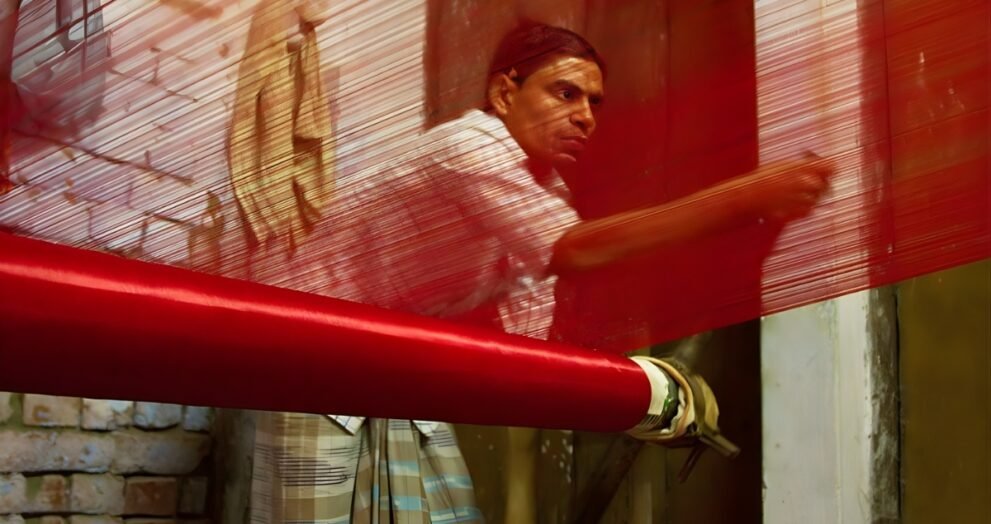
The Looms of Kashi: Threads of Legacy & Livelihood
-
Humans of kashi / 2 weeks

- 0
- 2 min read
In the dim glow of an oil lamp, a rhythmic clatter echoes — tak-tak-tak. It’s the sound of a weaver’s life in Varanasi. Kashi’s weaving tradition dates back centuries, with references to its exquisite fabrics found in ancient texts like the Rig Veda and the Mahabharata. For centuries, the Banarasi saree has been India’s fabric of grace, worn in weddings and worship alike. Yet behind its shimmering zari lies the untold struggle of thousands of weavers. Documentary films like Bunkar have highlighted their plight but also their pride. NGOs and government schemes are trying to revive the art through training, digital sales and exhibitions. Each saree is a work of art that can take weeks, sometimes months to complete. Every motif from kalga to bel is a silent prayer woven into the thread. These artisans aren’t just weaving fabric; they are preserving the heritage. Every saree they create carries within it stories, emotions and timeless traditions. To own a Banarasi saree is to hold a piece of India’s soul which is a living legacy of art, culture and devotion passed from mother to daughter, generation to generation. Families in areas like Madanpura and Lallapura have carried this craft for generations. But as machine-made fabrics flooded markets, traditional handlooms began to fall silent. “I learnt weaving from my father when I was ten” says 56-year-old Mohammad Idris. “Now my sons don’t want to continue as there’s no stability.” Despite challenges, the loom keeps beating. Because in Banaras, weaving isn’t just a livelihood, it’s devotion woven into silk.